Posted on Leave a comment

Recent Sunspots are Increasing Activity, Intensity and will have Interference in Earth’s Geomagnetic Storms.

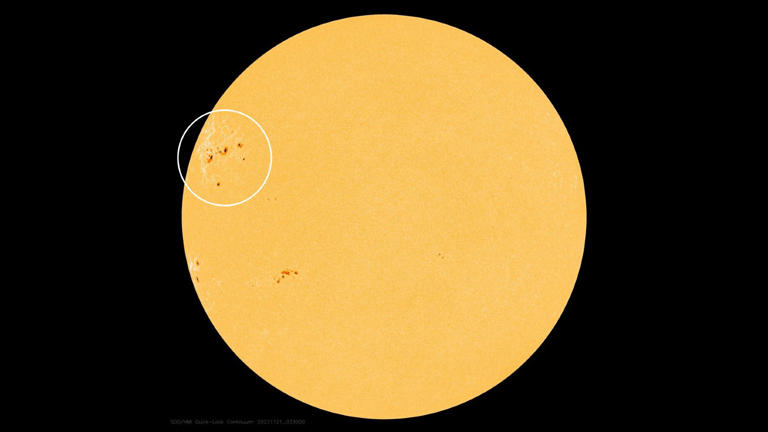
The sun has suddenly become much more active, bursting with sunspots and sending plumes of hot plasma out into space.

An enormous ‘sunspot archipelago’ could soon bombard us with solar flares (Picture: Nasa/SDO/HMI

In the last week alone, sunspot numbers have increased by 10 times, dotting the sun’s surface with black pockmarks spewing out several coronal mass ejections every day.


One of these coronal mass ejections (CMEs) may be due to hit the Earth in the coming days, a NASA model has shown, with one possibly due to collide with our magnetic field and atmosphere late on November 25. This will be confirmed after scientists fully analyze the trajectories of the storms.

What are coronal mass ejections? | Live Science

Coronal mass ejections are huge clouds of solar plasma that are spat out of the sun in regions of high magnetic activity, which can include sunspots. The sun may also send out solar flares, which are bright bursts of electromagnetic energy.

“Solar flares and CME are both caused by the sun through its magnetic field being twisted and stressed through motions in the sun,” Daniel Brown, an associate professor in astronomy and science communication at Nottingham Trent University in the U.K., told Newsweek. “However, a solar flare is the immense release of light triggered by the snapping and rearranging of the magnetic fields on the sun. That will go hand in hand typically with the release of a CME. But it will take a day or more for the particles to arrive while the light and radiation reaches us in just over 8 minutes. So, a good comparison is that a flare is the flash of a muzzle while the CME is actually the cannonball traveling and possibly hitting us.”


When the particles of a CME hit the Earth’s magnetic field and atmosphere, it can trigger a geomagnetic storm.

“A geomagnetic storm occurs when the Earth’s magnetic field is seriously disrupted by eruptions from the sun,” Huw Morgan, head of the Solar Physics group at Aberystwyth University in the U.K., told Newsweek. “When a large plasma storm erupts from the sun, and that storm carries a magnetic field which is oriented in an opposite direction to Earth’s magnetic field, we have a ‘perfect storm,’ and a larger geomagnetic storm.”

Geomagnetic storms vary in strength depending on the power of the CME that caused it, being measured on a scale between G1 (minor) to G5 (extreme), according to NOAA. The most powerful of the storms are the least common: while there may be 1700 G1 storms per 11-year solar cycle, we may only see 100 G4 storms and 4 G5 storms during that same period.


These geomagnetic storms can cause spectacular displays of aurora much further towards the equator than normal, with more powerful storms causing the northern lights to creep further and further south.

This occurs because charged particles in the Earth’s atmosphere are influenced and disturbed by the solar plasma hitting us, subsequently reacting with gases like nitrogen and oxygen in the air and causing them to glow.

“Under quiet conditions, charged particles (both from the solar wind and the ionosphere) can become trapped in the magnetosphere, happily bouncing from hemisphere-to-hemisphere, pole-to-pole. Under these circumstances, some of these charged particles will collide with upper atmospheric particles, causing auroras in the polar regions,” Brett Carter, an associate professor in space science at RMIT University in Australia, told Newsweek.

However, when a CME hits and causes a geomagnetic storm, these particles are forced deeper into the atmosphere, causing them to react with more gases and cause the aurora to be brighter and visible further.


SOHO images of the sun releasing CMEs on November 22 (left) and November 23 (right). One of the sun's recent CMEs may hit the Earth late on November 25. NASA / Solar and Heliospheric Observatory SOHO

SOHO images of the sun releasing CMEs on November 22 (left) and November 23 (right). One of the sun’s recent CMEs may hit the Earth late on November 25. NASA / Solar and Heliospheric Observatory SOHO© NASA / Solar and Heliospheric Observatory SOHO
 

Other than pretty lights in the sky, geomagnetic storms can also lead to some impacts on infrastructure, including fluctuations and outages in the power grid and radio blackouts.

“The affected infrastructure that is of most importance is large-scale power grids, without which modern society would not be able to function. Other than that, pipelines, High Frequency (HF) radio/radar and satellites in orbit are significantly affected,” Carter said. “Pipelines are known to also carry geomagnetically induced currents, which accelerates their corrosion. Satellites can experience increased surface charging due to the plasma environment in orbit, and this can affect the onboard electronics and operation of the satellite.


“Further, due to the huge amount of energy being dumped in the Earth’s atmosphere during these big storms, the atmosphere actually swells, and this causes more satellite drag in low-Earth orbit (up to about 1,000 km altitude, where the majority of our satellites are). Increased satellite drag further complicates efforts to keep track of everything in orbit, and making sure that collisions don’t take place. The really minor geomagnetic storm in February 2022 that resulted in the loss of the majority of a Starlink deployment is a perfect example of how varying satellite drag can complicate space operations.”

Beaver Moon, on the Horizon. 11/27/2023 Enjoy.

The “Beaver Moon” is coming tonight, here’s what you should know.

The Beaver Moon, a term steeped in history and folklore, has captivated the imagination of various cultures for centuries. The next full moon, rising on November 27, 2023, carries with it a rich tapestry of stories, scientific phenomena, and cultural significance.

Significance of the Beaver Moon

The term “Beaver Moon” is primarily attributed to the Native American groups of North America, specifically those in the northeastern United States. These groups, deeply attuned to the natural world, named the full moons throughout the year to keep track of the seasons and significant natural events.


November was the time when beavers, preparing for winter, would become particularly active. They would fortify their lodges and store food, crucial for survival during the harsh winter months.

For the Native Americans and early colonial settlers, this was also the time for trapping beavers. The beavers’ fur, thick and waterproof, was highly valued for making warm clothing and hats, essential for surviving the cold winter.

Astronomical aspects of the Beaver Moon

The next full moon, like all full moons, occurs when the Earth is positioned directly between the sun and the moon. This alignment allows the sun’s rays to fully illuminate the moon’s surface that faces Earth.

The exact date and time of the full Beaver Moon can vary annually due to the lunar cycle’s slight misalignment with the Gregorian calendar. In 2023, it will occur on November 27. The Beaver Moon is visible worldwide, with its exact appearance and timing differing slightly depending on geographical location.


Cultural and spiritual perspectives

In addition to Native American traditions, many other cultures have their own interpretations and names for the November full moon. For instance, in Europe, the next full moon was often called the Frost Moon, signaling the onset of frost and colder temperatures.

In various spiritual and astrological beliefs, the Beaver Moon holds significant meaning. It is often seen as a time of preparation and transition, reflecting the beavers’ behavior in the natural world. Some believe it is a period to focus on securing resources and setting intentions for the coming winter months.

Scientific perspective

From a scientific viewpoint, the Beaver Moon presents an opportunity for lunar observation and research. Scientists study the moon’s surface, its impact on Earth’s tides, and other lunar phenomena during full moon phases.

Despite its allure, the Beaver Moon is sometimes subject to myths, such as its influence on human behavior. Scientifically, no conclusive evidence supports these claims, but they remain a part of popular culture.

Observing the Beaver Moon

For enthusiasts looking to observe or photograph the Beaver Moon, clear skies and a high vantage point are ideal. Telescopes or binoculars can enhance the viewing experience, revealing the moon’s craters and seas in greater detail.

Many communities and astronomical societies organize events around the full moon, including the Beaver Moon. These gatherings often include moon viewings, cultural education, and sometimes spiritual or meditative practices.

In summary, the Beaver Moon is a bridge connecting us to the natural world and our ancestors who first named it. This next full moon of 2023 is a reminder of the rhythms of nature and the passage of time. It brings with it an opportunity to observe, reflect, and perhaps partake in the age-old traditions that celebrate the mysteries of the moon and the night sky.


Be patient Florida, this too, shall pass! Steven M Smith InspirationalTech.org CEO since 2013.

Thank you for consideration.

Inspirational Technologies
InspirationalTech.org for your Health Wellness Beauty and Inspirational Goals

For More Information on Cannabis and CBD and YOU.


AllRightsReserved2023

1st Hemp USA News is a resource of Inspirational Technologies (2023)
Continue reading Recent Sunspots are Increasing Activity, Intensity and will have Interference in Earth’s Geomagnetic Storms.
Posted on Leave a comment

What if marijuana is reclassified as a Schedule III substance?


Federal authorities are weighing whether to stop classifying marijuana among the riskiest drugs, a move that cannabis advocates have long hoped would result in more research on its health effects, businesses having an easier time selling it and fewer people going to jail.

Surgeon general suggests reconsidering marijuana's status as Schedule 1 ...


But experts warn the August recommendation by the Department of Health and Human Services to strip marijuana’s designation as a Schedule I drug may not fulfill those hopes.

The proposal before the Drug Enforcement Administration to reclassify marijuana as a Schedule III substance — in the same category as prescription drugs such as anabolic steroids, ketamine and testosterone — would free marijuana from some of the restrictions that apply to Schedule 1 drugs such as heroin and LSD. A decision is expected in coming months.

While marijuana advocates have cast the proposal as a step forward, some contend it doesn’t go far enough and would like to see the drug removed from the schedule system entirely, treated like tobacco and alcohol, and eventually legalized at the federal level.

Rescheduling marijuana would amount to a symbolic win in the quest to normalize the drug.


“A recognition from the federal government after all these years that marijuana is safe and effective as a therapeutic agent for patients is significant because obviously that would be a reversal of a very long-standing and very public position,” said Paul Armentano, deputy director of the National Organization for the Reform of Marijuana Laws (NORML), an advocacy group. “When it comes to the practical elements, I don’t think anyone knows because we have never gone down this road before.”

Marijuana legalization faces tough odds in holdout red states despite Ohio win.

The implications are mired in legal complications, especially because cannabis is caught in a convoluted system for regulating the drug across different levels of government as both medicinal and intoxicating. Here’s a rundown of what we know about rescheduling and the concerns swirling around different aspects of marijuana reform.

What does drug scheduling mean?

The Controlled Substances Act regulates drugs and categorizes them into one of five “schedules” depending on their medical benefits and potential for abuse.

The schedules aren’t a ranking of how bad the drugs are for you or society, but instead are a guide for how limited access to the drug should be for doctors, pharmacists and patients. (For example, LSD, which rarely kills users, is scheduled higher than opioid painkillers, which causes tens of thousands of fatal overdoses, because painkillers are routinely used in treating patients.)


Marijuana’s designation as a Schedule I substance means the federal government thinks there is no accepted medical use and a high potential for abuse. Federal law prohibits the cultivation and possession of Schedule I drugs, except for approved research studies.

Possible easing of marijuana restrictions could have major implications.

A Schedule III designation under consideration for marijuana means the drug has moderate to low potential for physical and psychological dependence. Federal health officials have declined to answer questions about how they have assessed marijuana’s potential for abuse and dependence.

Here’s where things get really tricky: Federal officials have previously said they are obligated to classify marijuana as a Schedule I or II substance under an international treaty to fight drug trafficking by tightly controlling narcotics. That’s one of the issues the DEA would have to sort out before deciding whether to reschedule the drug.


Effects on health research

All controlled substances come with restrictions on research, but marijuana and other Schedule I substances have the toughest requirements. Experts say it’s imperative to conduct more research on marijuana to understand its benefits and risks as legal markets flourish and consumer use soars.


To gain access to pot, researchers need to register with the DEA under rules that would not apply if they studied Schedule II substances like cocaine and fentanyl. They must submit research protocols to the DEA that need to be reviewed by the Food and Drug Administration. And they must meet stringent requirements for drug storage in electronic safes or vaults that some researchers say are too expensive and burdensome to follow.

“It’s incredibly excessive and totally unnecessary,” said Ryan Vandrey, a cannabis researcher at Johns Hopkins Medicine. “I can run an entire study with an amount of cannabis that’s less than $100 in street value and bought by an adult in the state of Maryland at any of the different dispensaries.”

Researchers have to obtain marijuana from growers that follow federal restrictions. But they say such restrictions on growing marijuana for studies make it harder to examine the effects of high potency products and other forms of cannabis now popular among consumers.

Image result for Researchers have to obtain marijuana from growers that follow federal restrictions. But they say such restrictions on growing marijuana for studies make it harder to examine the effects of high potency products and other forms of cannabis now popular among consumers.


Marijuana addiction is real. Those struggling often face skepticism.

Some researchers have found ways to get around these rules, but their studies have limitations.

For example, Washington State University researchers studying the cognitive effects of cannabis had to use Zoom to observe participants who just used marijuana they bought at dispensaries. The ideal study would involve researchers providing high-potency cannabis from dispensaries, including a placebo to a control group, and participants coming to a lab to provide blood samples and record physiological data points such as heart rate variability and cortisol levels that cannot be measured over Zoom.

The university risks losing federal funding if researchers administer cannabis themselves even though marijuana is legal in Washington, said Carrie Cuttler, an associate professor of psychology who directs The Health & Cognition (THC) Lab at Washington State.

“It’s absurd, absolutely absurd,” she said, “to treat cannabis as pretty much the most dangerous narcotic available in the world.”

Despite these restrictions, there is still plenty of research done on marijuana without ever handling the physical drug.

And experts caution there would still be hurdles in conducting the kind of research that’s now off-limits even if marijuana is reclassified as a Schedule III substance. That’s because the drug would still be treated as a therapeutic rather than an increasingly popular recreational product. It would still be difficult to study all the new marijuana products flooding the market, particularly edibles, vape cartridges and highly concentrated forms such as waxes and shatter.

Kevin Sabet, president of Smart Approaches to Marijuana, which opposes marijuana legalization, said his organization has proposed creating a new schedule category that would relax research restrictions on marijuana while maintaining other restrictions from its Schedule I status.


Unclear future for the cannabis industry

One of the toughest questions to answer about rescheduling is what it would do to the thousands of marijuana companies operating in a legal gray zone.

It is expected they would be able to deduct business expenses from their tax obligations for the first time, boosting their bottom lines. Beyond that, it gets complicated.

Industry advocates hope rescheduling might encourage more banks to work with marijuana companies, but a bill in Congress to shield fnancial institutions from punishment is the more direct path for achieving that goal.

There is no precedent for reclassifying a drug that is legal in states, and the booming marijuana industry, and its broad network of direct-to-consumer sales, is nothing like the markets for other Schedule III drugs such as ketamine and testosterone, which require a prescription.

In some ways, the status quo of treating marijuana as one of the riskiest drugs may actually be better for business.

Because marijuana is a Schedule I substance, the FDA has punted to the DEA to regulate it, and the DEA is not in the business of overseeing industries and markets.

A group of marijuana organizations raised concerns that treating marijuana as a Schedule III substance meant for medicinal purposes could upend the industry. They fear the FDA would prohibit recreational marijuana and hold therapeutic products to the high bar needed to sell medicine — requirements only large pharmaceutical companies may realistically be able to overcome — but leading experts dismiss that concern as unfounded.

Some experts argue that it is unlikely the FDA will suddenly crack down on marijuana after taking a largely hands-off approach for years, given the disruption it would cause and the resources it would take. Advocates counter that there’s no guarantee the winds won’t shift — for example, if Florida’s Republican governor, Ron DeSantis, wins the presidency after railing against marijuana.

“There is no way anyone could know or predict in our current political climate what the risk of FDA enforcement is,” said Shaleen Title, a former Massachusetts marijuana regulator who runs a cannabis think tank. “What I worry about is by trying to relax marijuana laws, we would inadvertently end up in a situation where we would be criminalizing existing state operators in a new way.”


Limited impact on federal pot prosecutions

Marijuana is illegal at the federal level regardless of how it’s classified, and rescheduling alone would not change penalties for major federal marijuana cases.

Possession of Schedule I substances is a federal crime, but few people go to federal prison just for having marijuana. Federal marijuana trafficking charges have plunged 90 percent in a decade as authorities make fentanyl their top priority. Under federal law, rescheduling would not affect penalties for trafficking convictions, said Shane Pennington, a D.C. attorney who specializes in cannabis law.

“It’s going to be a lot less of a boon for criminal justice reform than people think,” Pennington said.

Marijuana prosecutions tend to happen in state courts, and there were at least 209,000 arrests for possession last year, according to FBI statistics.

Along the Interstate 40 corridor that cuts across the Texas Panhandle between New Mexico and Oklahoma, local police officers routinely arrest motorists transporting marijuana loads from illegal grow operations in California, said Texas defense attorney Adam Tisdale, who specializes in marijuana cases. The loads are typically headed to Florida, and the drivers are charged in state court with possession of marijuana, which becomes a felony depending on the weight of the marijuana. Tisdale predicts local officers won’t stop making those arrests, which usually result in hefty fines, not jail time.

President Biden grants mass pardons for those convicted of simple marijuana possession.

“It won’t make any difference in my neck of the woods,” Tisdale said of rescheduling.

Proponents of rescheduling, such as the U.S. Cannabis Council, say it would send a powerful signal to law enforcement agencies that marijuana cases should be a low priority.

Critics, including the former DEA and White House officials who signed a letter organized by the anti-marijuana organization Smart Approaches to Marijuana, argue that rescheduling removes a “key tool” that federal agents have in prosecuting cartels.

Experts are split on what impact rescheduling would have on the nation’s criminal justice systems, which for decades have punitively targeted people — particularly Black and Latino people — for possessing or trafficking in a drug that is now legal for recreational use in 23 states. The Minority Cannabis Business Association and other advocates for racial equity in marijuana policy contend rescheduling alone continues the war on drugs.

“I don’t know if it’s worth the trade-off to be stuck in this murky middle,” said Kaliko Castille, board president of the Minority Cannabis Business Association. “You are still going to have business owners making millions of dollars and others in prison for a plant.”

Loosening restrictions on marijuana may not be boon for reform© Melina Mara/The Washington Post

Be patient Florida, this too, shall pass! Steven M Smith InspirationalTech.org CEO since 2013.

Thank you for consideration.

Inspirational Technologies
InspirationalTech.org for your Health Wellness Beauty and Inspirational Goals

For More Information on Cannabis and CBD and YOU.


AllRightsReserved2023

1st Hemp USA News is a resource of Inspirational Technologies (2023)
Continue reading What if marijuana is reclassified as a Schedule III substance?
Posted on Leave a comment

The U.S. House voted Tuesday to extend the current (old) 2018 farm bill for one year while negotiations continue on a new farm bill.

Congress extends 2018 Farm Bill another year.

Congress took steps this week to avert a year-end cliff for key farm and food assistance programs as lawmakers have struggled to reauthorize a new farm bill this year.

Here’s what that means for Iowa farmers. And a look ahead to O HI O.

The U.S. House voted Tuesday to extend the current farm bill for one year while negotiations continue on a new farm bill.

House lawmakers passed a short-term funding bill to keep the federal government operating and avert a shutdown, sending the bill to the Senate days before a Friday deadline. The Senate as expected quickly approved the bill, which would allow President Biden to sign it into law before the deadline.


The legislation extends funding for the U.S. Department of Agriculture at current spending levels until Jan. 19 and extends all programs at levels provided in the 2018 Farm Bill through Sept. 30, 2024.

It provides funding for a handful of small-ticket programs that were orphaned at the end of fiscal year 2023, including feral swine eradication, urban agriculture and a reserve fund for overseas food aid. The outlays would be offset by rescinding $177 million in unobligated funds in the Biorefinery Assistance Program and savings in USDA internal operations.

Without an extension, farmers would see commodity policies revert to permanent law with controls on production and costly price supports adopted in the 1930s and 1940s.

Under the House-passed stopgap spending bill, dairy subsidies would be extended through Dec. 31, 2024, to avert the looming “dairy cliff” on Jan. 1, when the government-guaranteed price of fresh milk would more than double, potentially driving up grocery-store prices.

Iowans in Congress want new Farm Bill passed.

While good news for farmers, Iowa Republican U.S. Sen. Chuck Grassley and U.S. Rep. Ashley Hinson, of Marion, said the extension is not a substitute for a reauthorization.

“There was no way I would have let the Farm Bill expire, and I’ve already urged Speaker Johnson to put passing a strong Farm Bill at the top of our priority list,” Hinson said in a statement to The Gazette.

On Iowa Politics

She said she’ll continue working with her colleagues to strengthen voluntary conservation programs, lower input costs, provide regulatory certainty, and ensure an affordable food and fuel supply for Iowans.

“I’ll continue working to ensure the final legislation strengthens risk management tools like crop insurance, preserves and expands market access for ag products, promotes precision ag and other farmer-led conservation, and modernizes USDA conservation programs to improve resiliency against flooding and drought,” she said.

Iowa Republican U.S. Rep. Mariannette Miller-Meeks, of Ottumwa, said in a statement to The Gazette that it is “essential that the House move forward and swiftly pass a Farm Bill that is written by and for our farmers.”

“As Iowa leads the United States in corn and ethanol production, it is vital that we advocate for provisions to grow the industry,” Miller-Meeks said. “We must also work to safeguard commodity and conservation programs, rural broadband funding, and crop insurance initiatives.”

Grassley, speaking to reporters by phone Wednesday, said the House bill has a good chance to passing the Senate.

“The extension will provide certainty, but just for one year, and that’s obviously not as good as if we got a five-year program through,” he said.

Grassley added program pricing that provides financial protections to farmers from substantial drops in crop prices included in the 2018 Farm Bill do not reflect increased input costs for fertilizer, chemicals, seed and fuel.

The sprawling legislative package that’s reauthorized every five years supports several key farm and safety net programs, like crop insurance, as well as agriculture research, rural development, conservation, SNAP benefits — once called food stamps — and more.

Uncertainty lingers.

Chad Hart, an economist and crop markets specialist for Iowa State University Extension and Outreach, said passage of the House bill provides farmers with some certainty about whether key farm commodity support will continue.

Hart noted some mandatory expenditures and others marked as discretionary that fund food assistance programs could go forward, but that funding for food assistance for women and children who rely on the Special Supplemental Nutrition Program for Women, Infants, and Children — commonly called WIC — would run out and cease operations if a shutdown runs long enough.

“There’s not been a lot of forward-thinking discussion of what changes might be made in either existing programs or new programs created in the next Farm Bill, “Hart said.

” This buys them another year to basically have that discussion. … Income support programs will be in effect for the 2024 crop year. Before the extension, those programs stopped with 2023. But will the government be able to run the programs and cut the checks? “

Nearly all eligible workers at the Columbus-based Strawberry Fields dispensary have voted to join Teamsters Local 413, becoming the first in Ohio to affiliate with the union.

The move comes several weeks after Ohioans approved an initiative to legalize adult-use cannabis Nov. 7.


“This is the first of many proprietors we will be organizing now in Ohio, especially now that recreational cannabis is legal,” said Tony Jones, Teamsters International VP at large and president of Local 413.

“These workers are an amazing group of people who stood strong in spite of the company running a nasty anti-union campaign. I have no doubt that the tenacity, bravery, and solidarity they demonstrated during the lead-up to the election will serve them well when we start negotiations.”

Union organizing is going on while Ohio’s now legal cannabis program is under attack by the Republican-dominated state House and Senate. Gov. Mike DeWine (R) and Senate leader Matt Huffman (R) are chipping away at the initiative in an effort to revise it before cannabis possession and cultivation become legal Dec. 7, when the initiative led by the Coalition To Regulate Marijuana Like Alcohol goes into effect.

“The success of our latest organizing effort is a clear message to the Ohio cannabis industry: workers demand and deserve respect,” said Peter Finn, Teamsters Western Region International VP and Food Processing Division Director.

“This is just the beginning. We’re on a mission to transform this industry one contract at a time, with sustainable, middle-class careers.”

Strawberry Fields Budtenders Weigh In: “This is a huge moment for the Teamsters, Ohio, the labor movement, the cannabis community, and especially us,” said budtender Estlin Hiller. “By unanimous decision, after months of hard work by everyone involved, we won. We are ecstatic about this outcome, immensely proud of one another, and looking forward to bargaining our first contract. Strawberry Fields united, solidarity forever.”

Nearly all eligible workers at the Columbus-based Strawberry Fields dispensary have voted to join Teamsters Local 413, becoming the first in Ohio to affiliate with the union.

The move comes several weeks after Ohioans approved an initiative to legalize adult-use cannabis November 7th, 2023.


“This is the first of many proprietors we will be organizing now in Ohio, especially now that recreational cannabis is legal,” said Tony Jones, Teamsters International VP at large and president of Local 413.

“These workers are an amazing group of people who stood strong in spite of the company running a nasty anti-union campaign. I have no doubt that the tenacity, bravery, and solidarity they demonstrated during the lead-up to the election will serve them well when we start negotiations.”

Union organizing is going on while Ohio’s now legal cannabis program is under attack by the Republican-dominated state House and Senate. Gov. Mike DeWine (R) and Senate leader Matt Huffman (R) are chipping away at the initiative in an effort to revise it before cannabis possession and cultivation become legal Dec. 7, when the initiative led by the Coalition to Regulate Marijuana Like Alcohol goes into effect.


“The success of our latest organizing effort is a clear message to the Ohio cannabis industry: workers demand and deserve respect,” said Peter Finn, Teamsters Western Region International VP and Food Processing Division Director.

“This is just the beginning. We’re on a mission to transform this industry one contract at a time, with sustainable, middle-class careers.” O HIGH O Budtenders Weigh In: “This is a huge moment for the Teamsters, Ohio, the labor movement, the cannabis community, and especially us,” said budtender Estlin Hiller. “By unanimous decision, after months of hard work by everyone involved, we won. We are ecstatic about this outcome, immensely proud of one another, and looking forward to bargaining our first contract. Strawberry Fields united, solidarity forever.”


Story by Gazette 

……………..

Be patient Florida, this too, shall pass! Steven M Smith InspirationalTech.org CEO since 2013.

Thank you for consideration.

Inspirational Technologies
InspirationalTech.org for your Health Wellness Beauty and Inspirational Goals

For More Information on Cannabis and CBD and YOU.


AllRightsReserved2023

1st Hemp USA News is a resource of Inspirational Technologies (2023)
Continue reading The U.S. House voted Tuesday to extend the current (old) 2018 farm bill for one year while negotiations continue on a new farm bill.
Posted on Leave a comment

So, I Live in Florida. Can I Grow Marijuana?

Does Florida Require a Marijuana Grower to Obtain a Cultivation License?

Yes. The State of Florida requires marijuana growers to obtain cultivation licenses before they can legally grow marijuana. However, the cultivation license is bundled with marijuana treatment center licenses and is not issued exclusively. Per Florida Statutes Section 381.986, only licensed medical marijuana treatment centers (MTC) may cultivate marijuana in the state. The Florida Department of Health issues marijuana treatment center licenses. Florida’s MTC licenses permit organizations to grow, process, transport, and dispense low-THC cannabis, medical cannabis, and engage in cannabis delivery devices. At the inception of the MTC program, the Department of Health licensed only ten new marijuana treatment centers. Currently, it issues four new licenses for every 100,000 new medical marijuana patients that register with the state’s medical marijuana program. It is illegal to grow marijuana on private residential properties in the State of Florida.

Image result for medical marijuana treatment centers

Per state laws, Florida requires all medical marijuana treatment centers to show the technical and technological ability to grow marijuana. They are also required to prove the ability to secure their premises and hire appropriate personnel needed to grow marijuana. MTCs must equally maintain accountabilities for all raw material, finished products, and other byproducts to prevent unlawful access or diversion. The medical marijuana treatment centers are only permitted to make bulk purchases of marijuana if they can convince the Department of Health that their harvest failed.

Several rules apply to MTC when cultivating marijuana in Florida. These include:

  • Pesticides used for growing marijuana must be approved by the Department of Health in consultation with the Department of Agriculture and have proven to be safe and for human consumption.
  • Marijuana must be grown in an enclosed space with restricted access and separate from other plants.
  • Marijuana plants must be treated and fumigated, while infected plants must be removed and destroyed.

What Are the Different Types of Cultivation Licenses in Florida?

Florida has only one type of marijuana cultivation license, which comes bundled with the MTC license. MTC licenses permit MTC to grow marijuana on the state-recommended scale. Licensed MTCs in Florida practice vertical integration. As such, they must cultivate, process, and transport their marijuana products.

Who Can Grow Marijuana in Florida?

Licensed marijuana treatment centers are the only legal entities permitted to grow marijuana in the State of Florida. As stipulated in Florida Statutes Section 381.986. only qualified staff above 21 years who have passed a level 2 background check in line with the state laws are permitted to work in marijuana treatment centers. Generally, staff of MTC’s do not require special permits to grow marijuana. However, the MTCs are required to provide appropriate training on the cultivation and handling of marijuana and marijuana products to their staff. Florida does not permit felons or individuals with prior criminal records to work in a marijuana treatment center.

How to Get a Marijuana Cultivation License in Florida

To obtain a marijuana cultivation license, interested parties must apply for an MTC license as this is the only license in Florida that permits a marijuana business to cultivate marijuana. 

Per Section 381.986(8)(a), F.S., the Department of Health is responsible for issuing licenses to marijuana treatment centers. To apply for an MTC license, an applicant must complete the Application for Medical Marijuana Treatment Center Registration Form and submit it to the Department of Health for processing. MTC licenses are issued biennially and applicants must adhere to the application’s requirements, blind grading, format, and organization as prescribed on the application form. Completed applications must be submitted with the following:

  • A non-refundable application fee of $60,830
  • A written proof from the Florida Department of State or Department of Revenue confirming that the applicant has a Florida registered business that has existed for at least five years. The applicant’s name on the application must match the name on any such supporting documentation.
  • Written evidence that the applicant holds a current Department of Agriculture and Consumer Services certificate of registration.
  • A list of the owners, managers, officers, and board members together with the date of their most recent Level-2 background check within one year of the application

Completed license application forms and supporting documentation should be hand-delivered to: 

The Department of Health

Office of Medical Marijuana Use

4052 Bald Cypress Way

Tallahassee, Florida

The Department of Health will review submitted applications and then notify applicants with incomplete applications within 15 days of receiving the applications. Applicants with incomplete documentation are required to provide any missing document within five days of receiving such notifications. 

If an applicant’s documentation is complete, the application is forwarded to subject matter experts for review and scoring. A team of seven subject matter experts in different relevant fields will then review and score relevant sections of the application. These experts will analyze, evaluate, and score applications using the Scorecard for Medical Marijuana Treatment Center Selection Form. Subject matter experts involved in this process include:

  • A Professional with two years of relevant experience or a master’s degree holder in agriculture, horticulture, or agronomy
  • A Professional with two years of relevant experience or a master’s degree in chemistry, biology, or biochemistry
  • A Professional with two years of relevant experience or a master’s degree in industrial engineering, supply chain management, or strategic management
  • A Professional with two years of relevant experience or a master’s degree in a field related to running a business in a highly regulated environment 
  • Individuals with at least two years of management experience in a health-care-related firm
  • Individuals with active CPA licenses or current law licenses and experience in business structuring

Each applicant’s score from each section is added to give the applicant’s overall score. Applicants who do not pass the background check or meet the minimum scores for cultivation, processing, marijuana dispensing, security, or general operations, will not be included in the final application ranking. Per Section 381.986(8)(a)3., F.S., applicants with facilities used for canning, concentrating, or processing of citrus fruits will receive 35 additional points. 

Image result for department of agriculture florida

Licenses are issued to applicants who:

  • Have been registered to operate a business in Florida for at least five years before the license application
  • Have valid registrations from the Department of Agriculture and Consumer Services, as required by section. 581.131 of Florida Statutes
  • Can show the ability to develop and produce marijuana, including but not limited to low-THC cannabis, on a technical and technological level.
  • Can show the capacity to procure the appropriate facilities, resources, and hire employees to run a medical marijuana treatment facility.
  • Have the ability to keep track of all raw materials, completed products, and byproducts to avoid diversion or unauthorized access to or ownership of these substances.
  • Have a system in place to deliver marijuana to certified patients who have registered.
  • Can show proof of financial ability to continue operations for a 2-year approval cycle, including providing certified financial statements to the department.

Under Section 381.986(8)(a)2, F.S., 10 licenses are to be issued at the start of the medical marijuana treatment center program. The law requires that priority be given to the following categories of applicants:

  • An applicant whose application was reviewed, analyzed, and scored by the department but was denied a marijuana dispensing organization license by the department under former Florida Statutes 2014 shall be licensed by the department if:
    • The applicant had one or more administrative or judicial challenges pending as of January 2017
    • The applicant shows the department that it has the required infrastructure, technical, and technological capabilities to start cultivating marijuana within 30 days of registration for a medical marijuana treatment center.
  • One applicant who is a recognized class member of Pigford v. Glickman, 185 F.R.D. 82 (D.D.C. 1999) or In Re Black Farmers Litig

Preference is given to applicants that qualify to be licensed and demonstrate in their applications that they own facilities used for the canning, concentrating, or processing of citrus fruit. If two applicants score an equal number of points in the evaluation, the applicant with the highest score in Financials – certified documents, Financials – Business Structure, Diversity Plan, and Accountability- Operations in order of priority is selected.

Once a license application has been approved, the applicant must within ten days:

  • Post a performance bond, provide an irrevocable letter of credit to the department or provide financial assurance to the tune of $5 million.
  • Provide proof to back up any statements made in the application about property ownership and leases.

How Much Do Marijuana Cultivation Licenses Cost in Florida?

Florida marijuana cultivation license is bundled with the MTC license. The MTC license permits interested parties to grow, process, and dispense medical use marijuana in the state. MTC licenses are reviewed and renewed every two years for $60,830.

Florida Marijuana Cultivation License | FloridaStateCannabis.org

Can Licensed Marijuana Cultivators Hold Other Cannabis Licenses in Florida?

Yes. Generally, the MTC license permits license holders to grow marijuana in Florida. It also allows them to process, produce, retail, and dispense marijuana in the state. However, MTC license holders are not permitted to operate marijuana testing centers.

Florida Cannabis Information Portal


We, at Inspirational Technologies are at the forefront of Inspirational and Frontrunners on the frontier of current technology.

We are often faced with our own personal conflicts which directly influence our interactions with our peers and family. 

When Inspirational Technologies is an endorsement of the “Cannabis” approach to the medical condition, we say, let’s let the look at the data and the people who say that they benefit for cannabis alternatives.


Inspirational Technologies (2023)


InspirationalTech.org for your Health Wellness Beauty and Inspirational Goals

For More Information on Cannabis and CBD and YOU. Click On the Following Link

Cannabis CBD and Me

Thank you for consideration.

Inspirational Technologies 2023


AllRightsReserved2023

1st Hemp USA News is a resource of Inspirational Technologies (2021-2023)
Inspirational Technologies (2023) AllRightsReserved
Your ONE STOP BLOG FOR INFORMATION, EDUCATION, & INSPIRATION OF ESSENTIAL INNOVATION & RENOVATION of You-
THANK YOU FOR YOUR INTEREST
*This site receives virtually no compensation for sales of some or all mentioned products. We however place humanitarian value over monetary interests. Our monetary income goes back into research, development, discovery and healing.
Inspirational Technologies – is Committed to Your Health Wellness Beauty and Enrichment
Reporting on Today’s Internal Botanical and Skin Product Benefits

4 Hemp Club was Inspired by Steven Smith’s vision to   “Have an older generation 4H Club, where an older community of adults could carry on what the younger 4H Club envisioned.

Our 4H Platform Uses HEMP as an Agricultural Focal Point, deserving of research, development and with the

4 Hemp key points being Health Hope and Happiness, thru Hemp“.

Cannabis CBD and Me  
Inspirational Technologies Inspirational Technologies (2014) @Inspire123tech Background Noise Studios Logos by
Steven M Smith
AllRightsReserved2023

#cbdtea #cbdoils #cbdcures #hempproducts #hempcommunity #cbdedibles #healthylifestyle #weed #cbdflower #cbdeducation #cbdforpain #cbdtincture #thc #cbdlove #hempcbd #cbduk #cbdforanxiety #anxiety #cbdoilbenefits #cbdbeauty #cbdstore #cbdcream #natural #cbdforpets #hempheals #cbdfacts #cbdwholesale #cbdproducts #cbd #cbdhealth #cbdoil #cbdoil #coa #hemp #cbdhealth #cbdproducts #cannabis #cbdlife #cannabiscommunity #cbdmovement #hempoil #cbdheals #cbdcommunity #cbdvape #cbdwellness #cbdbenefits #cannabisculture #cbdgummies #cannabidiol #health #organic #wellness #cbdflowers #cbdisolate #cbdhelps #cbdshop #hemplife #cbdedibles #cbdhemp #sativa #cbdtincture #weed #cbdlifestyle #cbdoils #indica #cbdcures #cbdskincare #cbdflower #anxiety #fullspectrum #cbduk #ultrabroadspectrum #medicalmarijuana #cbdforthepeople #cbdoilbenefits #healthylifestyle #natural #cbdforpain #cannabinoids #bhfyp #cannabisoil #cbdeducation #hempcommunity #life #hempproducts #hightimes #weedstagram #inspirational #technologies #inspirationaltechnologies #backgroundnoisestudios #1sthempusa #hempower #2018farmbill #hempfarm #hempfarmers #industrialhemp #hempseed #WeAreInThisTogether #MentalHealth #AnxietyHelp #DepressionHelp #MentalHealthMatters #LoveThisAbility #cbdlife #cbdmovement #hemp #cbdcommunity #cbdheals #cbdwellness #cbdbenefits #cannabis #cannabiscommunity #hempoil #cbdgummies #cbdflowers #wellness #cbdhelps #health #organic #cbdshop #cannabisculture #hemplife #cannabidiol #cbdlifestyle #cbdhemp #cbdskincare #hempflower #bhfyp #mcoa #inspire #hempsmart #inspirationaltechnologies #global #IndustrialHemp#cbdoil #coa #hemp #cbdhealth #cbdproducts #cannabis #cbdlife #cannabiscommunity #cbdmovement #hempoil #cbdheals #cbdcommunity #cbdvape #thc #cbdwellness #cbdbenefits #cannabisculture #cbdgummies #cannabidiol #health #organic #wellness #cbdflowers #cbdisolate #cbdhelps #cbdshop #hemplife #cbdedibles #cbdhemp #sativa #cbdtincture #weedporn #cbdlifestyle #cbdoils #indica #cbdcures #cbdskincare #cbdflower #anxiety #fullspectrum  #ultrabroadspectrum #Marijuana #CropGrowth #2023marijuana

#2023

Our ONE STOP BLOG FOR INFORMATION, EDUCATION, & INSPIRATION OF ESSENTIAL INNOVATION & RENOVATION of You-

#AllRightsReserved-InspirationalTechnologies2023


Posted on Leave a comment

Florida to Remove Caps on Hemp THC content.

Over the past month, hemp entrepreneurs have traveled to the Florida State Capitol to advocate against a proposal to regulate hemp-derived products that could potentially hurt the hemp industry.

But Monday, many of those same professionals were cheering after the sponsor of the latest version of the bill removed any reference to limiting the THC dosage of those hemp-derived products. THC is the compound in the cannabis plant that can get you high.

In a committee meeting Monday, Manatee County House Republican Will Robinson Jr. said: “All caps are O.U.T., Out.”

Robinson was responding to a colleague, Democrat Anna Eskamani, of Orlando, on the committee. Robinson confirmed to her that his new amendment to the legislation would remove any references to capping the amount of THC in hemp products.

That means that products in hemp stores are not going to be affected in terms of their potency to consumers.

At the same time, the bill is still moving on issues regarding safety. The measure still maintains the safety requirements to keep products like Delta-8 THC out of the hands of those under age 21, provisions that aren’t remotely controversial and have been embraced by virtually everyone who has testified in three previous committee meetings held in the House and Senate.

“We’ve sure come a long way on this one,” said Florida Cannabis Action Network president Jodi James.

“You did a great job – saved a lot of businesses,” added William Clark from the Libertarian Party of Florida.

Carlos Hermida owns a hemp dispensary in Tampa and has attended previous committee meetings about the bill. He opted not to travel to Tallahassee Monday when he saw Robinson’s amendment added to the legislation last Friday.

“The public spoke and Robinson listened!” Hermida told the Phoenix in a text message. “I can’t help but be thankful to the representative for protecting the hemp industry and protecting our children.”

As originally written, Robinson’s bill HB 1475 (as well as a similar version in the state Senate) set limits on how much THC could be included per serving and per package of hemp products. Robinson raised the limits after the bill received its first hearing in a House committee, but hemp advocates said the limits still were far too low and would have made hemp-derived products less potent for consumers to purchase and thus threaten their businesses.

Robinson admitted that “there is more work to be done in this space,” but said that it was also a great indication that the committee process works. “It’s very important to take input from stakeholders and others,” he said.

The measure was unanimously approved by the House Infrastructure Committee, its third and final committee and now will go to the House floor. Its Senate equivalent (SB 1676) is scheduled to go before the Fiscal Policy Committee on Thursday of this week.

Posted on Leave a comment

2023 Farm Bill to Support Production of Newly Legalized Hemp Farming

  • Hemp absorbs twice as much carbon per hectare of land than a forest does, and hemp-derived products can be used to replace paper, petroleum-based plastics, and cotton fibers.
  • In 2021, the U.S. hemp market was reported to be worth $824 million in 2021. By 2030, the global hemp market is predicted to be worth $17.24 billion.
  • The 2023 Farm Bill offers an opportunity to iron out ambiguities surrounding hemp production that will benefit farmers and stabilize the market. The upcoming Farm Bill is also an opportunity to create hemp policies that recognize the historical injustices that Indigenous and Black farmers have experienced.

Across the aisle, the question of how to handle the production of industrial hemp, a newly legalized crop, is on legislators’ minds. As the 2023 Farm Bill begins to come into focus, this carbon-sequestering plant has the potential to reshape U.S. agriculture.

Hemp absorbs twice as much carbon per hectare of land than a forest does, and hemp-derived products can be used to replace paper, petroleum-based plastics, and cotton fibers. But hemp, a strain of the Cannabis plant (from which marijuana is derived), was previously considered a Schedule I substance—the most highly regulated narcotics under the Controlled Substances Act.

The 2014 Farm Bill (P.L. 113-179legally distinguished hemp from marijuana by defining hemp as having a delta-9 tetrahydrocannabinol (THC) level below 0.3 percent, which is insufficient to produce narcotics. But it limited hemp cultivation to research purposes only. The 2018 Farm Bill (P.L. 115-334) relaxed many restrictions and established the Domestic Hemp Production Program, making it easier for farmers to grow and sell hemp. The legalization of hemp cultivation in the United States has allowed farmers to employ the crop to promote sustainable farming practices and produce sustainable alternatives to plastics and other materials.

The 2023 Farm Bill can serve as an opportunity to ensure hemp is cultivated and produced to its fullest potential. Ambiguities in federal laws must be addressed to ensure that the hemp market, which was reported to be worth $824 million in 2021, continues growing.

Power to the Plant

Much of hemp’s appeal as a sustainable solution stems from its carbon sequestration rate. In an interview with Dezeen, Cambridge University researcher Darshil Shah stated that hemp can capture between 10 and 15 tons of atmospheric carbon dioxide (CO2) for each hectare of cultivation, a rate twice that of forests. Its fast growth rate means that farmers have the opportunity to harvest hemp multiple times per year, priming it for climate mitigation efforts.


Cultivating hemp doesn’t require the heavy use of pesticides or large amounts of water, and with such water-input versatility, the plant can be grown in a variety of types of soils and climates. When planted, hemp can be used as a cover crop and bolster the soil nutrient profile. The plant can also help stabilize erosion with its deep roots that also absorb and remove heavy metals from the ground.

Hemp’s high yields hold the promise of replacing other fiber- and oil-producing plants. According to the National Hemp Association, one acre of hemp produces double the amount of oil than an acre of peanuts does, and it also produces four times as much fiber pulp used for paper than an acre of trees does. When processed, every part of the hemp plant can be used for a wide range of products, including biofuels and textiles.

The wide range of versatile hemp-derived products has the potential to address U.S. reliance on plastics, fossil fuels, and cotton, by serving as a sustainable replacement. Currently, the Center for International Environmental Law predicts that plastic consumption will continue increasing and account for 20 percent of oil consumption by 2050. Hemp, however, offers a naturally biodegradable alternative that can replace petroleum-based plastic materials on both the commercial and industrial scale. Alongside bioplastics, hemp has gained prominence being a durable alternative to cotton, as it requires less land and around half of the water cotton crops need. Beyond clothing and plastics, hemp has been used in construction with products like hempcrete, and its seeds have been used in cosmetics and in food for their nutritional value. With this plethora of sustainable benefits, hemp has the potential to reshape more than just agriculture.

Moreover, the carbon sequestration of hemp has the potential to reduce greenhouse gas (GHG) emissions from U.S. agriculture—which the EPA estimated accounted for 11.2 percent of total U.S. GHG emissions in 2020. By offering sustainable alternatives to high-emission products, hemp cultivation could help the United States meet its climate goals.

Addressing Diversity in Farming via Hemp

Though the legislative focus on industrial hemp has been relatively recent, Indigenous peoples have been farming hemp long before it was legalized in the 2014 Farm Bill. Yet, current hemp legislation and its enforcement do not quite recognize this—nor do they treat Indigenous farmers equally to their white counterparts.

In 2015, the Drug Enforcement Administration (DEA) seized 30,000 hemp plants and invaded sovereign land belonging to the Menominee Indian Tribe of Wisconsin, claiming that these plants violated the law as they were intended to produce marijuana. The Menominee Indian Tribe of Wisconsin filed a lawsuit against the DEA agents for the destruction of their crops. They claimed that they were legally growing hemp on their lands for research by the College of the Menominee Tribe, yet the judge agreed with the DEA’s attorney and dismissed the lawsuit.

This case is an example of how the enforcement of hemp legislation is complicated by the history of Indigenous land dispossession by the U.S. government. Environmental activist and member of the Ojibwe tribe Winona LaDuke is advocating for both the environmental benefits and social benefits of hemp policy crafted with respect to communities of color, their histories, and their beliefs.

Writing for the Esperanza Project, LaDuke spotlights how plots of hemp qualify as carbon sinks, with the plant itself being capable of replacing carbon-intensive materials. LaDuke notes that these qualities offset GHG emissions, which prompts ecological restoration that can be led by young Indigenous leaders. Thus, there is potential for hemp production to provide added income to Indigenous communities and act as part of a path toward a sustainable, circular economy.

The hemp market is predicted to continue to grow and reach a global value of $17.24 billion by 2030. With this growth comes the opportunity for more farmers to get involved—farmers such as Indigenous and Black farmers who have been traditionally left behind by agricultural policies. Hemp can be grown on small plots of land, a trait beneficial for farmers of color who typically do not own the same large expanses of land that their white counterparts do.

Black and Indigenous communities in the United States have faced a history of exclusion from land ownership and economic opportunities, and this history has shaped their access to agriculture today. According to a 2012 USDA report, only 1.4 percent of the country’s 3.2 million farmers are Black farmers as a result of discrimination from lending institutions, including the USDA. Black farmers are hoping to see hemp policy address historical injustices in agriculture.

A change to hemp licensing would be a first step to addressing historical injustices. Federal law requires farmers applying for hemp licenses to not have had a drug felony in the past 10 years. As the Drug Policy Alliance reports, Black and Latinx people are more likely to have marijuana-related drug felonies which, under this policy, further excludes them from harvesting the benefits of hemp.

A lack of hemp education is another issue affecting both Black and Indigenous farmers that hemp policy could address. The Pew Charitable Trusts has reported on organizations forming to educate people on hemp, what it is, and how to acquire a license for it. Such education could be undertaken by the federal government to ensure that hemp production is inclusive and sustainable for all.

Hemp’s Future in the Farm Bill

The Farm Bill has always been an opportunity for policymakers to address agricultural and food issues on a federal level. The federal government defined industrial hemp, differentiating it from marijuana, and developed the Hemp Research Pilot program to legalize hemp cultivation for research purposes in the 2014 Farm Bill. Outside of research, hemp production was still illegal under federal law. The 2018 Farm Bill legalized hemp cultivation outside of pilot products, though it also restricted the THC content of hemp plants.

hemp_graphic.png

Moreover, the 2018 Farm Bill legalized hemp production in states, territories, and tribal lands, and hemp was added to the Federal Crop Insurance Act to ensure that hemp farmers receive government assistance for crop losses. It also took what has been considered a first step in addressing inequity in farming: states must report to Congress how much funding they’re providing to their historically Black land-grant colleges and universities and also to predominantly white institutions.

Ahead of the 2023 Farm Bill, the House Agriculture Subcommittee on Biotechnology, Horticulture, and Research held a congressional hearing to see how the next Farm Bill could improve hemp production. In this hearing, the need for clear regulations around CBD (the active ingredient in cannabis derived from hemp plants) and for stronger supply chain processing were highlighted, alongside further opportunities for hemp-derived products within climate markets.

Frustration and confusion around CBD laws has been a topic of concern for hemp farmers since the 2018 Farm Bill. Now, it is one of the issues hemp industry advocates hope to see addressed in the 2023 Farm Bill. Beyond CBD, the National Hemp Association is hoping to see three other major changes. It is advocating for a specific carve-out for hemp grain and fiber to develop a framework for promoting these products, for hemp grain to be allowed as animal feed to support farmers, and for the THC limit to be raised to one percent instead of 0.3 percent. Raising the THC limit has been discussed by numerous hemp organizations and farmers, as a one percent limit provides leeway and lessens the need for crops to be destroyed.

The National Law Review highlights further hemp-related changes that may be included in the 2023 Farm Bill, one of which being the revision of the broad definition of hemp. Currently, only delta-9 THC has been regulated in the 2018 Farm Bill, and there are worries that this is a loophole for unregulated hemp sales of other kinds of THC. Moreover, federal laws do not address what happens when the THC level of raw hemp exceeds the 0.3 percent allowed, even if it is ultimately processed into a product that will have a lower THC percentage (this is often referred to as “in-progress” hemp).

With many organizations highlighting the need to iron out ambiguities surrounding hemp laws, the 2023 Farm Bill may be the prime opportunity to do so. Including smart hemp production and cultivation policies in the 2023 Farm Bill has the potential to make the hemp industry more sustainable, inclusive, and profitable.

Author: Lynlee Derrick

We, at Inspirational Technologies are at the forefront of Inspirational and Frontrunners on the frontier of current technology. We are often faced with our own personal conflicts which directly influence our interactions with our peers and family. 

When Inspirational Technologies is an endorsement of the “Cannabis” approach to the medical condition, we say, let’s let the look at the data and the people who say that they benefit for cannabis alternatives.

Inspirational Technologies (2023)


InspirationalTech.org for your Health Wellness Beauty and Inspirational Goals

For More Information on Cannabis and CBD and YOU. Click On the Following Link

Cannabis CBD and Me

Thank you for consideration.

Inspirational Technologies 2023


AllRightsReserved2023

1st Hemp USA News is a resource of Inspirational Technologies (2021-2023)
Inspirational Technologies (2023) AllRightsReserved
Your ONE STOP BLOG FOR INFORMATION, EDUCATION, & INSPIRATION OF ESSENTIAL INNOVATION & RENOVATION of You-
THANK YOU FOR YOUR INTEREST
*This site receives virtually no compensation for sales of some or all mentioned products. We however place humanitarian value over monetary interests. Our monetary income goes back into research, development, discovery and healing.
Inspirational Technologies – is Committed to Your Health Wellness Beauty and Enrichment
Reporting on Today’s Internal Botanical and Skin Product Benefits

4 Hemp Club was Inspired by Steven Smith’s vision to   “Have an older generation 4H Club, where an older community of adults could carry on what the younger 4H Club envisioned.

Our 4H Platform Uses HEMP as an Agricultural Focal Point, deserving of research, development and with the

4 Hemp key points being Health Hope and Happiness, thru Hemp“.

Cannabis CBD and Me  
Inspirational Technologies Inspirational Technologies (2014) @Inspire123tech Background Noise Studios Logos by
Steven M Smith

AllRightsReserved2023

#cbdtea #cbdoils #cbdcures #hempproducts #hempcommunity #cbdedibles #healthylifestyle #weed #cbdflower #cbdeducation #cbdforpain #cbdtincture #thc #cbdlove #hempcbd #cbduk #cbdforanxiety #anxiety #cbdoilbenefits #cbdbeauty #cbdstore #cbdcream #natural #cbdforpets #hempheals #cbdfacts #cbdwholesale #cbdproducts #cbd #cbdhealth #cbdoil #cbdoil #coa #hemp #cbdhealth #cbdproducts #cannabis #cbdlife #cannabiscommunity #cbdmovement #hempoil #cbdheals #cbdcommunity #cbdvape #cbdwellness #cbdbenefits #cannabisculture #cbdgummies #cannabidiol #health #organic #wellness #cbdflowers #cbdisolate #cbdhelps #cbdshop #hemplife #cbdedibles #cbdhemp #sativa #cbdtincture #weed #cbdlifestyle #cbdoils #indica #cbdcures #cbdskincare #cbdflower #anxiety #fullspectrum #cbduk #ultrabroadspectrum #medicalmarijuana #cbdforthepeople #cbdoilbenefits #healthylifestyle #natural #cbdforpain #cannabinoids #bhfyp #cannabisoil #cbdeducation #hempcommunity #life #hempproducts #hightimes #weedstagram #inspirational #technologies #inspirationaltechnologies #backgroundnoisestudios #1sthempusa #hempower #2018farmbill #hempfarm #hempfarmers #industrialhemp #hempseed #WeAreInThisTogether #MentalHealth #AnxietyHelp #DepressionHelp #MentalHealthMatters #LoveThisAbility #cbdlife #cbdmovement #hemp #cbdcommunity #cbdheals #cbdwellness #cbdbenefits #cannabis #cannabiscommunity #hempoil #cbdgummies #cbdflowers #wellness #cbdhelps #health #organic #cbdshop #cannabisculture #hemplife #cannabidiol #cbdlifestyle #cbdhemp #cbdskincare #hempflower #bhfyp #mcoa #inspire #hempsmart #inspirationaltechnologies #global #IndustrialHemp#cbdoil #coa #hemp #cbdhealth #cbdproducts #cannabis #cbdlife #cannabiscommunity #cbdmovement #hempoil #cbdheals #cbdcommunity #cbdvape #thc #cbdwellness #cbdbenefits #cannabisculture #cbdgummies #cannabidiol #health #organic #wellness #cbdflowers #cbdisolate #cbdhelps #cbdshop #hemplife #cbdedibles #cbdhemp #sativa #cbdtincture #weedporn #cbdlifestyle #cbdoils #indica #cbdcures #cbdskincare #cbdflower #anxiety #fullspectrum  #ultrabroadspectrum #Marijuana #CropGrowth #2023marijuana

#2023

Our ONE STOP BLOG FOR INFORMATION, EDUCATION, & INSPIRATION OF ESSENTIAL INNOVATION & RENOVATION of You-

#AllRightsReserved-InspirationalTechnologies2023