A Decade of Hemp Innovation: Inspirational Technologies’ Journey and Next Chapter
This is my past, present, and future vision by Steven M. Smith, Founder & CEO of Inspirational Technologies – September 2025 – Over a decade ago, Inspirational Technologies set out to combine natural wellness with advanced science, and now we’re taking a bold leap forward. Founded in 2013 by Steven Smith, our journey began as a small Florida startup with a mission to connect traditional botanical remedies with modern technology. From those modest beginnings, we’ve evolved into a leader in hemp-based innovation, driven by resilience, discovery, and a strong sense of purpose. Today, we’re thrilled to unveil a new chapter for Inspirational Technologies—building on our foundation and embracing the future of hemp and cannabinoids to bring relief to even more people.
2013–2015: Laying the Groundwork
Logo by Steven M Smith Created 3/1/2014
In the early years (2013–2015), we laid critical groundwork. Steven Smith’s background in plant sciences and passion for holistic health drove the initial focus on researching plant-based compounds, particularly those in hemp and other medicinal herbs. We were essentially a research lab with a big dream: to validate traditional botanical remedies using rigorous modern science. During this time, we established an education hub on our website (InspirationalTech.org) to share research updates and demystify hemp for the public. This proved vital in combating public misconceptions, as many people at the time still conflated hemp with psychoactive cannabis. Indeed, throughout the 20th century, stigma and prohibition had severely complicated cannabis research, and in the early 2010s hemp was legally categorized alongside narcotics despite its lack of THC. Navigating this environment was challenging – regulations were murky, funding was limited, and we often had to explain that hemp isn’t about “getting high,” but about healing. [Frontiers…: from …][What Does…usinesses?]
Industial Hemp Field
Challenges: Regulatory uncertainty was the toughest hurdle in our infancy. Government rules around cannabis research were ambiguous or restrictive, making it difficult to source materials and secure funding. Public perception was another obstacle; early on, some investors and consumers were wary, not yet educated on the difference between non-intoxicating hemp compounds and marijuana. We tackled these challenges through education and transparency. By openly sharing scientific findings and safety data on our website and in community seminars, we started changing minds.
In 2014, our persistence paid off: we secured our first private investment, providing much-needed R&D capital, and validated our vision to those who believed in the potential of cannabinoids. That same year we launched our website as a content hub, positioning Inspirational Technologies as a trustworthy voice explaining the science of CBD and hemp. This focus on education built credibility and began eroding the stigma.
Successes: Despite the headwinds, by 2015 we had established a solid foundation. We had a small lab, a growing network of academic collaborators, and early data hinting at hemp’s therapeutic promise. For example, our team initiated studies on hemp-derived compounds and their effects on conditions like inflammation and anxiety, drawing on expertise from university partners. These academic collaborations not only guided our research but also validated our early findings in peer-reviewed settings, showing that our work was on the right track. We closed 2015 with optimism – and a budding reputation as pioneers willing to push botanical science into new territory.
2016–2018: Expanding into Hemp and Cannabinoids
By the mid-2010s, cannabidiol (CBD) was gaining mainstream attention as a potential wellness game-changer. Research interest in CBD was exploding worldwide, and public awareness of hemp’s benefits was on the rise. Inspirational Technologies embraced this momentum and shifted focus squarely onto hemp-derived cannabinoids. This period marked our evolution from a general plant research startup into a dedicated hemp innovation company.
Research Milestones: Between 2016 and 2018, we embarked on ambitious studies of CBD’s potential health benefits. Our research teams (now working with medical scientists) explored how CBD could help reduce anxiety, alleviate inflammation, and even act as a neuroprotective agent for the brain. Early results were promising: for instance, preliminary experiments suggested CBD had notable anti-inflammatory effects (supporting what many others were finding), and could modulate stress responses in animal models. We weren’t alone in these discoveries – around this time scientific literature was burgeoning with cannabinoid research. Academic partners working with us published validating findings, adding credibility. The scientific community was confirming what we believed: CBD and related cannabinoids held real therapeutic promise. Notably, evidence began emerging that CBD might provide relief in anxiety without the downsides of THC. (In fact, a few years later a clinical trial would show CBD can quell anxiety symptoms effectively without impairment.) The more data we gathered, the more confident we became that our path was the right one. [CBD shown…e with THC], [CBD shown…e with THC]
Product Development: Research findings quickly fed into product ideas. By 2017, we had developed our first prototypes of CBD-infused wellness products, including a topical cream for pain relief and a tincture (oral drops) for stress and general wellness. Formulating these was an exciting step from lab bench to real-world application. We sourced high-quality hemp extracts and combined them with synergistic herbs, leveraging our roots in botanical science to create unique blends. Each prototype was tested for safety and efficacy in small trials. The feedback from early testers was encouraging – users reported less joint pain after applying the cream, and better sleep with the tincture. This R&D phase taught us about effective dosing, bioavailability (for example, how well the body absorbs CBD in different forms), and user preferences. It set the stage for the full product line we’d launch once the regulatory coast was clear.
Obstacles: If you rewind to 2017, selling a hemp-based product was not straightforward. Federal law still treated hemp extracts in a gray zone, which made distribution and marketing a tricky affair. We could develop products and even give out samples, but large-scale sales were hampered by legal ambiguity. Shipping CBD across state lines lived in a legal limbo – technically hemp was still a Schedule I substance federally, even though it has no high-inducing THC. This meant we had to proceed carefully and focus on states with clear hemp programs. We also had to be very cautious about marketing language, avoiding any medical claims that could draw ire from regulators (the FDA had started warning companies about unproven claims). Yet, we persisted, keeping our operations lean and compliant. We engaged with industry groups advocating for hemp law reform, and continuously educated lawmakers and the public on CBD’s safety. All of this groundwork positioned Inspirational Technologies to spring ahead when the law finally caught up with science. [What Does…usinesses?], [What Does…usinesses?]
A Turning Point – Legalization: Late 2018 brought the breakthrough we and the entire industry had been waiting for. The U.S. Congress passed, and the President signed, the Agriculture Improvement Act of 2018 the “Farm Bill” (see our story)
December 2018 – The Farm Bill Legalized Hemp
2019–2022: Growth through innovation and Partnerships
With legal clarity achieved, Inspirational Technologies moved full speed from R&D into the marketplace. The period from 2019 to 2022 was one of rapid growth, new partnerships, and establishing our leadership in the hemp wellness space. We transitioned from a small startup into a recognized brand with a national reach.
Commercial Launch: In early 2019, we officially launched our first line of CBD-based wellness products to the public. The line included the refined versions of our topical CBD cream and sublingual tincture, now branded under the Inspirational Technologies banner, as well as capsules and an all-natural CBD balm. We leveraged e-commerce and select health store partnerships for distribution. The timing was perfect: consumer interest in CBD had exploded, and people were eager to try these newly legal remedies. In fact, by 2020 nearly one-third of U.S. adults had used a CBD product, a huge leap in adoption from just 14% in 2019. We were ready to meet the demand with products formulated on a foundation of science and quality. Each batch was lab-tested for purity and potency, and we published the results online to continue building trust through transparency.
1st Hemp USA 2021 Inspirational Technologies
Partnership with hempSMART:
A key milestone in this phase was our strategic partnership with hempSMART in 2019.
HempSMART – a California-based company known for its science-driven CBD formulations – shared a similar ethos with us. By partnering, we aimed to combine our strengths: Inspirational Technologies’ research and product innovation, with hempSMART’s established marketing channels and customer base. Together, we celebrated on product development and education. For example, we co-hosted webinars featuring experts like Paula Vetter (hempSMART’s medical advisor) to inform consumers about CBD’s benefits. This partnership expanded our reach across the U.S. and even into international markets where hempSMART had a presence. It was a win-win: hempSMART gained new formulations and R&D support, while we gained a ready distribution network and a boost in brand visibility. Collaboration has always been in our DNA, and this was a powerful example of how working with like-minded innovators could amplify our impact.
Scaling Up: Internally, these years saw our team grow and our capabilities scale. We onboarded new talent – from formulation chemists to regulatory consultants – to handle everything from product manufacturing to compliance in a fast-evolving regulatory environment. In 2020, hempSMART opened a larger production facility in Florida, enabling us to increase output to meet surging demand.
Our efforts at maintaining high standards earned recognition: by 2021, Inspirational Technologies was being recognized as a leader in hemp-based innovation, with industry magazines featuring our story and calling out our commitment to quality. We also invested in intellectual property, filing patents related to advanced cannabinoid extraction techniques and delivery methods (like a water-soluble CBD nanoemulsion to improve absorption).
This era wasn’t without its challenges, of course. The regulatory landscape, while improved, remained complex – the FDA still hadn’t fully figured out how to categorize CBD products, and we had to stay on top of patchwork state regulations. Public perception, however, continued trending in our favor. By 2022, 60% of Americans had tried CBD and believed in its benefits, reflecting a massive shift in acceptance. What was once fringe had become mainstream, found in everything from gummies and lattes to pain salves. We made sure Inspirational Technologies stood out in this crowded market by doubling down on science and trust – emphasizing evidence-backed uses, avoiding hype, and advocating for sensible regulations to protect consumers. Our reputation for integrity became one of our strongest selling points. [CBD Statis…bes Health]
Highlights 2019–2022: We achieved several key milestones in this growth phase: new product launches (including a popular CBD + herbal adaptogen capsule in 2021), revenue growth that outpaced our projections, and an expanding loyal customer community. We also saw the broader hemp industry flourish, validating our faith in this plant. (U.S. CBD product sales skyrocketed from about $108 million in 2014 to nearly $1.9 billion by 2022, illustrating the boom we were part of.) Inspirational Technologies had firmly established itself — not just as a company selling wellness products, but as an innovator helping to shape an entire industry. [CBD Statis…bes Health]
2023 and Beyond: Embracing a New Frontier
The stage is set for an exciting new chapter. As the metrics above show, the environment in 2023–2025 is remarkably different from a decade ago. Consumer acceptance of hemp remedies is at an all-time high, and the market has grown exponentially. With widespread legality and a mountain of supporting research, cannabinoids are poised to transform mainstream healthcare and wellness. In this context, Inspirational Technologies is embracing a new frontier. Our new direction will leverage everything we’ve learned over the past 12 years and push further to realize the full potential of hemp-based science. Here’s what to expect as we move forward:
1. Pioneering Advanced Therapeutics: The heart of our new direction is a commitment to deeper scientific exploration of cannabinoids and their medical potential. CBD opened the door, and now we’re walking through it with a toolkit of cutting-edge science. We are expanding our R&D to study lesser-known cannabinoids like CBG (cannabigerol) and CBN (cannabinol), which are also derived from hemp but have unique properties. For instance, recent research from Yale University highlighted CBG’s strong potential for pain relief without opioid risks, and ongoing studies suggest CBN may aid sleep. We believe these compounds, especially in synergy (the “entourage effect”), could address health issues that CBD alone hasn’t fully solved. To that end, Inspirational Technologies is initiating clinical collaborations to formally test cannabinoid-based therapies for specific conditions. We’re in discussions with medical centers to launch trials on a CBD-CBG blend for chronic neuropathic pain and on a cannabinoid regimen for anxiety and PTSD. The goal is to move beyond wellness products into the realm of evidence-backed therapeutics – bridging the gap between supplement and medicine. It’s an ambitious step, but it’s aligned with our founding mission of merging nature with advanced science. The scientific promise is truly compelling: studies show cannabinoids might offer safer alternatives to opioids for pain, relieve anxiety without harsh side effects, and even help in neurodegenerative diseases like Alzheimer’s. In 2018, the U.S. FDA approved its first CBD-based prescription drug for severe childhood epilepsy, validating that cannabinoids can meet the highest standards of medicine. We foresee a future where cannabinoid therapies are a trusted part of mainstream healthcare, and we want to be at the forefront of that movement. Our new direction prioritizes rigorous research, so doctors and patients can have confidence in the hemp-derived treatments we develop. [Cannabinoi…ain relief], [Cannabinoi…ain relief][Cannabinoi…ain relief][CBD shown…e with THC], [CBD shown…e with THC][Frontiers…: from …][What Does…usinesses?]
2. Emerging Applications in Disease Relief: We are also broadening the applications of our products to target more specific needs. Over the years, customers have shared incredible stories of finding relief with our creams and tinctures – from an athlete’s persistent knee pain easing to an anxious traveler finally enjoying a calm flight. These experiences inspire us to tailor solutions for some of the most prevalent and pressing health challenges. Chronic pain, for example, affects millions and often leads to dependence on painkillers. With cannabinoids showing effectiveness in reducing inflammation and pain signaling, we are formulating targeted pain-relief applications, such as an advanced arthritis cream and oral supplements for inflammatory conditions. Mental health is another focus: anxiety and sleep issues are on the rise, and many are seeking natural relief. We’re exploring blends of CBD with terpenes and botanicals known for calming effects, to support those struggling with stress or insomnia. Early next year, we plan to release a CBD+CBN nightly tincture aimed at improving sleep quality naturally. On the more advanced end, we’re keeping an eye on research that suggests cannabinoids could play a role in serious conditions like cancer. A recent comprehensive study even found evidence that cannabis compounds might help fight certain cancer cells and improve patients’ quality of life. While we remain grounded in science (and such uses will require extensive validation), it underscores a key point: the therapeutic horizon of hemp is still expanding. Our new product roadmap is designed to adapt as new discoveries emerge. If a study finds that a CBD-THC combination (with minimal THC) works best for a given condition, we have the agility and knowledge to formulate accordingly – always within legal bounds. In short, we’re widening our scope from general wellness to targeted solutions for disease relief, driven by what science and our users tell us. [Cannabinoi…ain relief][New Study…naging …], [New Study…naging …]
3. Market Expansion and Leadership: As we venture into these new arenas, Inspirational Technologies is committed to growing sustainably and responsibly. The hemp and CBD industry is maturing – consolidation is happening, regulations are catching up, and consumers are becoming more discerning. We see this as a positive evolution and aim to be a leader in the next phase of the market’s development. Part of our new direction involves stepping up our role in industry advocacy. We are actively engaging with policymakers and regulatory bodies to help shape commonsense regulations for hemp products. Our stance is that quality and safety standards are needed to weed out bad actors selling mislabeled or impure products. We’re advocating for measures like third-party lab testing requirements, proper labeling, and research-based dosage guidelines. We’re also preparing for the potential regulatory changes ahead. The FDA in the U.S. has hinted at developing a new framework for CBD in dietary supplements or foods, and bipartisan bills in Congress aim to clarify CBD’s legal status further. We welcome clearer regulations, and our team is proactively ensuring that whenever new rules come, we will not just comply but excel under them.
On the market front, we are exploring geographic expansion. Hemp’s acceptance is global now – countries across Europe, Latin America, and Asia-Pacific are embracing hemp CBD as laws evolve. Through the next couple of years, we plan to enter select international markets. We’re already laying groundwork in Canada and the EU, navigating their approval processes to offer our products abroad. Additionally, we’ll continue forging strategic partnerships. Just as our alliance with hempSMART accelerated U.S. growth, we’re eyeing partnerships in new regions (for example, a potential joint venture in Europe with a local wellness company) to bring our expertise to new audiences. At home, as the competitive landscape grows, we differentiate by staying true to science and innovation.
Product innovation remains key: our R&D pipeline includes not only new formulations but also new delivery technologies (imagine a transdermal patch for steady cannabinoid release, or a smart dispenser that gives personalized doses based on an app). Advanced technology – from bioinformatics to AI-driven data analysis – will increasingly inform how we design and validate our products, fulfilling the “advanced science” part of our mission with even greater precision.
Finally, as we look beyond 2025, Inspirational Technologies’ core values stay constant. The resilience, curiosity, and purpose that got us through the past decade will guide us in the next. We envision a future where a person with chronic pain might use a cannabinoid therapy we helped develop instead of habit-forming opioids; where someone with anxiety can find calm through a natural remedy backed by clinical evidence; and where hemp-based innovations contribute to a healthier, more sustainable world. The journey from a startup in 2013 to here has taught us that nature’s solutions and human ingenuity are an unstoppable combination. Our new direction doubles down on that truth. [Cannabinoi…ain relief]
Milestones and Future Goals at a Glance
To recap our journey and where we’re headed, here’s a summary of Inspirational Technologies’ major milestones over the past decade and our key goals for the future:
Year/Period
Major Milestones
Future Goals
2013
Founding: Steven Smith establishes Inspirational Technologies in Florida with a mission to merge natural wellness and advanced science. Begins research into hemp and medicinal herbs.
Global Health Impact: Leverage hemp compounds to improve lives worldwide, bridging nutraceuticals and pharmaceuticals.
2014
First Investment & Website Launch: Secures initial private funding. Launches InspirationalTech.org as an educational hub to share research and combat misconceptions about hemp.
Educational Leadership: Continue to educate consumers and health professionals about cannabinoids, setting industry standards for transparency.
2015
Research Foundations: Early lab studies on hemp compounds suggest potential benefits (anxiety reduction, anti-inflammatory effects). Establishes academic collaborations to validate findings.
Research & Development: Invest in clinical trials and R&D for new cannabinoid therapies (e.g., pain, anxiety, neuroprotection), turning promising research into approved treatments.
2016–2017
Focus on CBD & Product Prototypes: Pivots to focus on hemp-derived CBD as interest grows. Develops first CBD product prototypes (topical cream and tincture) blending botanical science with tech.
Product Innovation: Develop next-gen products (e.g., multi-cannabinoid formulas, improved delivery systems like patches or nano-emulsions) for more effective relief.
2018
Regulatory Breakthrough: U.S. Farm Bill 2018 legalizes hemp federally [What Does…usinesses?], [What Does…usinesses?], removing major legal barriers. Inspirational Tech poised to enter the national market with tested products.
Quality & Compliance: Lead in product quality, exceeding regulatory requirements. Work with regulators (FDA, etc.) to establish clear guidelines that ensure consumer safety and trust.
2019
Product Launch & hempSMART Partnership: Launches first retail products nationwide. Partners with hempSMART to expand reach and co-develop offerings, boosting brand visibility and distribution.
Strategic Partnerships: Build new alliances (with wellness companies, research institutes, healthcare providers) to expand globally and integrate hemp solutions into mainstream wellness and medicine.
2020–2021
Rapid Growth: Surges in customer adoption amid rising CBD popularity. Expands team and facilities; recognised in industry for science-driven approach. U.S. CBD use jumps (33% of Americans by 2020) despite lingering stigma.
Market Expansion: Enter new markets in Europe, Canada, and Asia as global hemp legalization progresses. Continue to adapt to market trends and consumer needs with agility.
2022
Industry Leadership: Establishes itself as a leading hemp innovation company. By 2022, U.S. CBD sales reach $1.9B [CBD Statis…bes Health] and 60% of adults have tried CBD [CBD Statis…bes Health] – a testament to growing acceptance that Inspirational Tech helped foster.
Industry Leadership & Advocacy: Influence the hemp industry’s evolution by advocating for sustainable practices, environmental responsibility in cultivation, and social responsibility in marketing (ensuring products are used appropriately for wellness).
2023
New Initiatives: Kicks off new R&D projects on cannabinoids like CBG/CBN for pain and sleep. Prepares for clinical collaborations to formally study cannabinoid therapies. Company culture shifts toward biotech startup mindset (hiring medical liaisons, data scientists).
Therapeutic Breakthroughs: Aim to achieve at least one FDA-approved cannabinoid therapy in the next 5–7 years, bringing a natural yet scientifically-vetted medicine to patients (e.g., a prescription CBD/CBG pain reliever).
2024
Preparation for New Direction: Aligns strategy with market trends and scientific advances. Strengthens compliance team for anticipated regulations. Engages with lawmakers on CBD policy. Concepts for personalized cannabinoid wellness programs (leveraging AI) in development.
Personalized Wellness: Utilize technology (AI and data analytics) to tailor cannabinoid-based solutions to individual needs, ushering in an era of personalized, plant-based medicine.
2025 & Beyond
Announcing New Direction: Unveils a forward-looking strategy focusing on advanced research, broader health applications, and global expansion. Poised to integrate hemp-based innovation into healthcare on a larger scale, staying true to the vision of holistic wellness powered by science.
Vision 2030: By 2030, become a global pioneer in cannabinoid science, with a portfolio spanning consumer health products, licensed medical treatments, and technological platforms – all while maintaining the trust and holistic principles that have defined Inspirational Technologies since 2013.
Conclusion: by Steven M. Smith
“As we step into this new chapter, Inspirational Technologies remains guided by the same principle that sparked our founding: the belief that nature and science together can improve lives. Our journey from 2013 to 2025 has been one of learning, innovating, and breaking barriers. We transformed challenges into opportunities – whether overcoming legal hurdles or shifting public perception – and in doing so, we’ve helped pave the way for hemp-based wellness worldwide. The future of hemp and cannabinoids is bright. From emerging scientific breakthroughs to evolving market dynamics, all signs point to an era where these natural compounds take a more central role in health and wellbeing.
With our rich history and renewed focus, we’re ready to lead in that era. The coming years will see Inspirational Technologies diving deeper into research, launching exciting new solutions, and reaching people in ways we once only imagined. We extend our heartfelt thanks to our supporters, partners, and customers who have believed in our mission. Together, we are forging a new path for natural wellness – one that honors ancient wisdom, embraces modern innovation, and inspires a healthier future for all.”
Stay tuned for more updates as we embark on this journey ahead. The best is yet to come.
All Rights Reserved – Inspirational Technologies 2025We hope this information has been helpful and informative. Don’t hesitate to reach out with any further questions. 😊Inspirational Technologies – IT is TimeAt Inspirational Technologies, we take pride in being pioneers and innovators in the constantly evolving world of technology.Life often presents personal challenges that shape our relationships with family and peers.Steven M. Smith, CEO of InspirationalTech.org since 2013.Thank you for considering Inspirational Technologies.Visit InspirationalTech.org to explore your health, wellness, beauty, and inspirational goals.Discover more about Cannabis, CBD, and YOU.Steven M Smith InspirationalTech.org CEO since 2013.Inspirational Technologies (2025)Predictive Artificial Intelligence News & Technology
1st Hemp USA News is a resource of Inspirational Technologies (2021)Logo by Steven M Smith Created 3/1/2014
*This site operates with minimal compensation for product sales. Humanitarian values are prioritized over monetary gains. Income supports research, development, discovery, and healing.
Inspirational Technologies is committed to your health, wellness, beauty, and enrichment.
Reporting on today’s botanical and skincare product benefits.
The legalization of marijuana varies drastically between states, with some lawmakers approving its use entirely, others allowing its use only for medical conditions, and some still punishing possession of the drug by a prison sentence.
Thirty-eight states currently have it legalized for medical use, with 24 permitting recreational use, allowing many Americans to have access to marijuana, also known as weed, in one way or another if they are over the age of 21
While it is still illegal on a federal level, President Joe Biden has made it clear that his administration intends to pursue decriminalization during his time in office. Whether this is likely ahead of the looming election, however, appears questionable.
Since Colorado and Washington’s legalization of recreational marijuana in 2012, 22 other states, and Washington, D.C., have slowly amended their laws in favor of decriminalizing the substance.
Five more states could amend their laws soon: Wisconsin, Florida, Hawaii, South Dakota, and South Carolina.
Amid the arrival of “4/20” day—a celebration for cannabis smokers each year, on April 20—Newsweek looks at some of the states that could push ahead with legalizing use of marijuana in some way.
Florida
Florida voters will be able to decide if recreational use of marijuana should be legal in the state at the ballot in November.
Users will need to be 21 years or older to legally consume it. Medical marijuana is currently permitted.
Gov. Ron DeSantis has been one of the proposal’s most vocal critics, saying he believes recreational use of the drug should not be legal in the state
The law change will require a 60 percent approval for the amendment to pass when voters head to the polls in November.
Hawaii
A bill to legalize the recreational use of marijuana for adults in Hawaii was approved by the House Consumer Protection and Commerce Committee in March, raising hopes that laws could be extended from granting medical use.
The bill was earlier passed by the Hawaii Senate, and Gov. Josh Green, a Democrat, has indicated he would sign the bill into law once the House passes the second version.
The law would specifically allow anyone aged 21 and older to possess up to 1 ounce of marijuana and up to 5 grams of cannabis concentrates. Hawaiians would also be able to possess their own produce—up to six plants and up to 2 pounds of harvested marijuana.
It would also expunge the criminal record of past convictions related to cannabis possession.
South Dakota
South Dakotan law changes are less advanced down the legislative path than other states on this list but campaigning to legalize recreational use—as well as the already legal medical use—remains vocal.
The state has tried several times in the past to achieve this, including a 2020 election ballot from voters approving the law change. But the South Dakota Supreme Court shut down the approval as unconstitutional a year later.
Voters then rejected another initiative in 2022. Now campaigners are working again to put the question to the electorate in November, requiring almost 18,000 signatures by May.
Wisconsin
At the start of the year Wisconsin appeared the most likely of any state to decriminalize medical marijuana, but a Republican bill fell flat ahead of an official vote.
The state bill was being considered to legalize use of the substance, but this would have been limited to severely ill people and would only be dispensed from five locations around the state. It would have also ruled out the legalization of smokable marijuana.
Leaders of the Republican-controlled Senate and state Assembly have largely supported the legalization, while Democratic Gov. Tony Evers has also previously voiced support to permit medical marijuana.
Currently possession of the drug is illegal in Wisconsin. Depending on the quantity of the substance you are caught with, it is possible to go to prison or incur heavy fines.
Despite the bill failing, conversation of reform has still grown steadily—and, while the state may fall short of legalization this year, Wisconsin remains one of the most likely areas of the country to proceed with medical marijuana laws.
Announcing the bill was effectively dead earlier this year, however, Assembly Speaker Robin Vos did give legalization supporters hope when he announced a public hearing to build support for passage next session would ensue later this year.
South Carolina
The South Carolina Senate passed a bill in February to allow the use of marijuana and related products for medical needs. But the bill has now sat in the state’s House of Representatives for two months with little hope of being debated on the floor.
State lawmakers will need to get a move on, with just weeks left before the House adjourns. Anything that does not make it to the House will have to be proposed again next year.
This has been the case for several years, with an almost identical bill dying in the House in 2022. Many state senators have been working for almost a decade to change the law.
It would still be illegal to smoke the drug or use it recreationally under the new law. Patients could instead use vaporizers or patches to gain the medical benefits.
Any use of cannabis is currently illegal in the state and can carry a fine of up to $1,000 and even 30 days to six months in jail.
The recreational use of marijuana is legal in 24 states, and Washington, D.C., as of April 2024. While jurisdictions differ on the legal quantity allowed for legal possession, almost half of U.S. states have now approved its use.
These include Alaska; Arizona; California; Colorado; Connecticut; Delaware; Illinois; Maine; Maryland; Massachusetts; Michigan; Minnesota; Missouri; Montana; Nevada; New Jersey; New Mexico; New York; Ohio; Oregon; Rhode Island; Vermont; Virginia; and Washington.
Other states have pushed ahead with legislation approving the substance’s use for medical conditions. While the laws vary, these states include Alabama; Arkansas; Kentucky; Louisiana; Mississippi; New Hampshire; North Dakota; Oklahoma; Pennsylvania; South Dakota; Utah; and West Virginia.
Marijuana is effectively illegal in the remaining 11 states: Georgia; Idaho; Indiana; Iowa; Kansas; Nebraska; North Carolina; South Carolina; Tennessee; Texas; and Wyoming.
AllRightsReserved-InspirationalTechnologies2024
I hope this information was helpful and informative. If you have any more questions, please feel free to ask me. 😊
Inspirational Technologies – IT is Time
We, at Inspirational Technologies are at the forefront of Inspirational and Frontrunners on the frontier of current technology.
We are often faced with our own personal conflicts which directly influence our interactions with our peers and family.
When Inspirational Technologies is an endorsement of the “Cannabis” approach to the medical condition, we say, let’s let the look at the data and the people who say that they benefit for cannabis alternatives.
Steven M Smith InspirationalTech.org CEO since 2013.
Inspirational Technologies “In the Weeds with Steve” to promote the diverse and disruptive Cannabis Culture.
Inspirational Technologies premieres “In the Weeds with Steve.” The long-awaited series, originally set to begin in September 2020, has finally begun production. Inspirational Technologies Production Company, Background Noise Productions, in the upcoming weeks, is slated to premier the anticipated, “In the Weeds with Steve”. Originally set to start in January 2021, was shelved due to the constraints of those days.
Beginning in November 2023 Inspirational Technologies will promote the long-awaited series, “In the Weeds with Steve “. An Inspirational Technologies production under their own “Background Noise Productions Studios.
Happy 420 — Origins, Laws, and the Moment We’re In
1. The Origin Story: How 420 Became a Cultural Signal
420 began as a simple meeting time among a group of California high‑schoolers in 1971 — the Waldos — who used “4:20” as a code for gathering after school. What started as an inside joke traveled through music culture, especially Grateful Dead circles, and eventually became a universal shorthand for cannabis itself.
Over the decades, 4:20 p.m. became a daily ritual, and April 20th evolved into a cultural holiday — part celebration, part protest, part community gathering. The beauty of 420 is that it was never created by a corporation, a government, or a marketing team. It grew organically, carried by people who believed in freedom, curiosity, and connection.
That’s why the origin still matters. It reminds us that cannabis culture was built from the ground up — by people, not institutions.
2. The Current Landscape: State Laws in 2026
The United States now lives in a patchwork reality:
Medical cannabis is legal in the majority of states, including Florida, where the program continues to expand in patient count and product availability.
Adult‑use legalization has passed in many states, but not all — and the rules vary dramatically.
Federal law still classifies cannabis as illegal, creating contradictions in banking, research, interstate commerce, and patient access.
Hemp remains federally legal, but states continue to tighten rules around intoxicating hemp derivatives.
This patchwork creates confusion for patients, consumers, businesses, and law enforcement. It also creates opportunity — because every year, more states move toward reform, and public support continues to grow.
Even in states without adult‑use legalization, medical programs like Florida’s show that regulated access can coexist with safety, oversight, and economic benefit.
3. The Political Climate: Optimism with Realism
The political climate around cannabis in 2026 is defined by momentum, contradiction, and public demand outpacing policy.
Here’s what’s shaping the moment:
Public support for legalization remains high, across party lines, according to multiple national polls.
Congress continues to debate reform, including banking protections and rescheduling proposals, but progress is slow.
States are acting faster than the federal government, creating a widening gap between state policy and federal law.
Courts and regulators are increasingly involved in defining the boundaries of hemp, THC limits, and product safety.
Advocacy groups continue to push for expungement, patient rights, and equitable access.
Optimism is justified — the direction of travel is clear — but realism is necessary. Reform is happening, but not at the pace many expected. The next breakthroughs will likely come from a combination of state‑level action, federal administrative changes, and continued public pressure.
Commentary by Steven Smith
Advocate for Cannabis Reform, Founder of Inspirational Technologies & PAiNT Research
“I’ve always believed that cannabis reform is ultimately about people — patients, veterans, families, and communities who deserve access, safety, and honesty. I’m optimistic, but I’m also realistic. I’ve seen how slow the system can move, how politics can stall progress, and how misinformation can cloud public understanding. But I’ve also seen something stronger: the steady rise of informed citizens who refuse to let outdated laws define their lives.”
“The future of cannabis is not just about legalization — it’s about education, research, and responsible access. Vaporizers, for example, represent a safer, more controlled way for many people to consume. They reduce combustion‑related harms and allow for precise dosing. As technology improves, so will safety, consistency, and patient confidence.”
“420 is a celebration, but it’s also a reminder. A reminder that reform is unfinished. A reminder that millions still lack access. A reminder that science must guide policy, not stigma. And a reminder that the culture that created 420 — grassroots, hopeful, human — is still alive.”
“And yes — it’s 4:20 somewhere. In fact, it’s 4:20 forty‑eight times a day around the world. That’s forty‑eight reminders that progress continues, that community matters, and that the future is brighter than the past.”
Closing Thought
Two days before 420, the message is simple: Honor the origin. Understand the laws. Stay engaged in the political moment. Celebrate responsibly. And keep pushing for a future where cannabis policy reflects science, compassion, and common sense.
🌿 CANNABIS LAWS BY STATE ( 2026)
Cannabis policy in the United States has evolved dramatically since California first recognized medical cannabis in 1996. Three decades later, the national landscape is a patchwork of adult‑use legalization, medical programs, decriminalization reforms, and a shrinking number of prohibition states.
As of 2026, most Americans live in a state where cannabis is legal in some form. Federal law still classifies cannabis as illegal, but state‑level reforms continue to expand, and public support for legalization remains at historic highs.
Below is the updated 2026 state-by-state breakdown.
✅ 2026 CANNABIS LEGALITY TABLE
Legend:
AU = Adult Use Legal
MED = Medical Legal
DEC = Decriminalized
CBD = CBD‑Only
IL = Illegal / Full Prohibition
This version is optimized for WordPress: clean columns, no broken spacing, and consistent formatting.
📊2026 Table
STATE
AU
MED
DEC
NOTES (2026)
Alabama
❌
✔️
❌
Medical only
Alaska
✔️
✔️
✔️
Fully legal
Arizona
✔️
✔️
✔️
Fully legal
Arkansas
❌
✔️
❌
Medical only
California
✔️
✔️
✔️
Fully legal
Colorado
✔️
✔️
✔️
Fully legal
Connecticut
✔️
✔️
✔️
Fully legal
Delaware
✔️
✔️
✔️
Adult-use sales active
District of Columbia
✔️
✔️
✔️
Sales restricted by Congress
Florida
❌ (no 2026 ballot)
✔️
❌
Medical only
Georgia
❌
CBD
❌
Low‑THC oil only
Hawaii
✔️
✔️
✔️
Adult-use legalized 2024
Idaho
❌
CBD
❌
CBD‑only; prohibition otherwise
Illinois
✔️
✔️
✔️
Fully legal
Indiana
❌
❌
❌
Full prohibition
Iowa
❌
CBD
❌
Limited low‑THC program
Kansas
❌
❌
❌
Full prohibition
Kentucky
❌
✔️ (2025 launch)
❌
New medical program
Louisiana
❌
✔️
✔️
Medical + decriminalized
Maine
✔️
✔️
✔️
Fully legal
Maryland
✔️
✔️
✔️
Fully legal
Massachusetts
✔️
✔️
✔️
Fully legal
Michigan
✔️
✔️
✔️
Fully legal
Minnesota
✔️
✔️
✔️
Adult-use legalized 2023
Mississippi
❌
✔️
❌
Medical only
Missouri
✔️
✔️
✔️
Fully legal
Montana
✔️
✔️
✔️
Fully legal
Nebraska
❌
❌
DEC
Decriminalized only
Nevada
✔️
✔️
✔️
Fully legal
New Hampshire
❌
✔️
DEC
Adult-use still pending
New Jersey
✔️
✔️
✔️
Fully legal
New Mexico
✔️
✔️
✔️
Fully legal
New York
✔️
✔️
✔️
Fully legal
North Carolina
❌
CBD
DEC
CBD‑only + decriminalized
North Dakota
❌
✔️
❌
Medical only
Ohio
✔️
✔️
✔️
Adult-use legalized 2023
Oklahoma
❌
✔️
❌
Medical only
Oregon
✔️
✔️
✔️
Fully legal
Pennsylvania
❌
✔️
❌
Medical only
Rhode Island
✔️
✔️
✔️
Fully legal
South Carolina
❌
CBD
❌
CBD‑only
South Dakota
❌
✔️
❌
Medical only (adult-use overturned)
Tennessee
❌
CBD
❌
CBD‑only
Texas
❌
CBD
❌
Limited low‑THC program
Utah
❌
✔️
❌
Medical only
Vermont
✔️
✔️
✔️
Fully legal
Virginia
✔️
✔️
✔️
Adult-use legal; sales pending
Washington
✔️
✔️
✔️
Fully legal
West Virginia
❌
✔️
❌
Medical only
Wisconsin
❌
CBD
❌
CBD‑only
Wyoming
❌
CBD
❌
CBD‑only
📌 Closing
The national trend remains clear: more states are moving toward regulated adult-use markets, and medical access is now the norm across most of the country. While federal reform remains stalled, state-level legalization continues to expand, driven by voter initiatives, legislative action, and shifting public opinion.
How Do States Decide on Their Cannabis Laws?
For decades, states have been changing their cannabis laws through both ballot initiatives and the legislative process. In states including California, South Dakota and New Jersey, voters have directly approved measures legalizing medical cannabis, recreational cannabis or both.
State legislatures have been passing laws to allow medical cannabis since the 1990s. In 2018, Vermont became the first state to legalize recreational cannabis through its legislature rather than through a ballot initiative. Since then, legislatures in states including Illinois and Virginia have followed suit.
A state’s cannabis laws don’t address every detail of how its system works. Instead, the law creates a framework within which state agencies and local governments can make more specific rules.
What Is Medical Cannabis?
Medical cannabis, as the name suggests, is prescribed by a doctor to treat specific conditions and symptoms. Studies have shown that cannabis can help patients with a variety of health concerns, including:
Certain kinds of epilepsy.
Nausea and vomiting caused by chemotherapy treatments for cancer.
The loss of appetite and weight loss that can be caused by HIV/AIDS.
Scientists continue to study whether cannabis is an effective treatment for some symptoms of multiple sclerosis, chronic pain and other conditions.
A physician will examine a patient and, if appropriate, provide a certification that the patient has a condition that can be treated with medical cannabis. Each state has its own list of qualifying conditions.
Once a patient has a physician’s certification, they can be placed on the state’s medical cannabis registry and issued an identification card. This card entitles them to purchase cannabis at a dispensary — a state-regulated store that is authorized to sell cannabis products. The amount of cannabis someone with a medical cannabis card can possess varies by state.
Another important difference between states is whether they recognize other states’ medical cannabis cards. Individuals must follow the rules of the state they are in, not just the state that issued their ID.
What Is Cannabis Decriminalization?
In addition to implementing and refining medical cannabis programs, states are also continuing to address the question of how to regulate the nonmedical use and possession of cannabis. As the map shows, many states now allow adults to possess and use cannabis with some restrictions. Others have opted instead for decriminalization.
Decriminalization of cannabis does not mean legalization of cannabis. Instead, decriminalization can reduce the legal consequences of those caught possessing or using cannabis.
Decriminalization generally means criminal penalties are replaced with civil penalties. For example, police would issue a citation instead of making an arrest, would not punish an individual with a jail or prison sentence, and the incident would not appear on the individual’s criminal record.
It’s important to note that these more lenient punishments generally only apply to the first-time possession of smaller amounts of cannabis — harsher penalties can be imposed for multiple infractions or for possessing larger amounts.
What Is CBD?
The Cannabis sativa plant contains both delta-9 tetrahydrocannabinol (THC) — the chemical compound found in medical and recreational cannabis — and cannabidiol (CBD). THC is psychoactive — it’s the chemical in cannabis that causes a “high.” CBD is not psychoactive. For this reason, many states have begun loosening restrictions on its use for medicinal and other purposes.
At both the state and federal levels, however, the law surrounding CBD remains complicated and unsettled. This is especially true when it comes to the presence of THC in CBD products. Since the two compounds are chemically similar and derived from the same plant, many CBD products contain some THC. Some states that allow CBD products but have more restrictive laws for THC have specified that CBD products may not contain more than a certain small amount of THC.
By isolating and extracting the CBD from Cannabis sativaplants, it is possible to create CBD-only products. Since these products contain no THC at all, they reduce some of the risk and uncertainty surrounding the production, sale and use of CBD.
Navigating State Cannabis Laws
The laws addressing recreational cannabis, medical cannabis and CBD continue to evolve. We’ll continue to update our map to reflect changes to each state’s cannabis laws. If you have questions about how specific laws affect your cannabis business, you can always reach out to us — we’ll help you find the answers.
What Cannabis Can (and Can’t) do for Chronic Pain. Pot for Pain Relief?
(Story by Karen Weintraub, USA TODAY) reprinted 1/26/2023.
A growing, but still incomplete body of research suggests the cannabis plant, the source of marijuana, can help fight some kinds of pain.
Rob Sims grew up hearing stories about what opioid addiction could do. The former Detroit Lions guard, whose father, Mickey, also played in the NFL, watched a number of his dad’s friends get hooked. Some died. He vowed his own story would be different.
Then, playing for the Seattle Seahawks in 2008, early in his pro football career, Sims tore a pectoralis muscle in his chest. Primed for his best year ever, Sims was sidelined.
After surgery, he received an open-ended prescription for opioids. “Take when you have pain,” the bottle read. “That’s seared in my memory,” he said. As a football player, “I have pain all the time.”
Scared by the lesson he had learned as a child and with little to do besides focus on his recovery, he remembers thinking: “This could go in a bad way.”
That’s when he turned to marijuana.
It remains unclear whether cannabis can be an effective treatment for pain. Plenty of circumstantial evidence supports the idea, but exactly how, what kinds of products and what can be expected from them has yet to be determined.
“There’s some caveats before it’s ready for broad, prime-time usage for chronic pain,” said Dr. Devan Kansagara, a professor of medicine at Oregon Health & Science University and a staff physician at the VA Portland.
It’s possible that cannabis helps with the psychological aspects of pain, said Dr. Nora Volkow, head of the National Institute on Drug Abuse. “Cannabis may improve pain indirectly, for instance, through decreasing anxiety so that someone may be able to deal with pain better,” she said.
One recent examination of previous studies found the benefits of cannabis were equal to the benefits of a placebo, which means that if people thought it would help, it did.
“There’s very limited evidence out there to support that cannabis is effective against pain,” said Karin Jensen, the Swedish neuroscientist who led the study. So far, most of the information showing its usefulness is anecdotal.
“People who use cannabis to relieve pain may have the experience that it helps – there is no doubt about that,” she said. “What’s needed is solid scientific evidence to determine how much of the relief is due to the cannabis and how much is due to other things, such as the placebo effect.”
The general public is already largely convinced.
Marijuana remains illegal in 12 states, but as of 2019, 18% of U.S. adults reported using cannabis at least once in the previous year, and 4% to 5% use it daily or nearly daily, Kansagara said.
It’s not possible to predict ahead of time who will react badly to marijuana, said Dr. Charles Berde, co-founder of a pediatric pain clinic at Boston Children’s Hospital.
THC, the part of the plant that has psychotropic effects, “has narrow uses for nausea and appetite stimulation in patients with severe weight loss due to AIDS or cancer,” but the data for CBD for treatment of chronic pain is “murky,” Berde said. “All the more reason to be hesitant to prescribe it.”
Cannabis and pain relief
When a body is in pain, the brain releases its own pain relievers. There are special receptors in the brain designed to take in these natural cannabinoids and offer relief.
Ingesting or inhaling weed fills up those receptors, too.
Providing more cannabinoids than these receptors can accept overloads them making the person’s own internal cannabinoids ineffective, said Dr. Jordan Tishler, a cannabis specialist physician in Cambridge, Massachusetts, and founder and president of the Association of Cannabinoid Specialists.
That’s why higher doses don’t provide any additional pain relief compared with lower ones and can have “all sorts of risks,” he said. Side effects from cannabis can include increased heart rate, dizziness, impaired concentration and memory, slower reaction times and, more rarely, increased risk of heart attack and stroke and dependence.
Tishler said many patients come to him taking far too much cannabis, which increases the risk for side effects. He works to convince them that 5 mg to 20 mg a day will treat their pain better than the 200 mg they’re using.
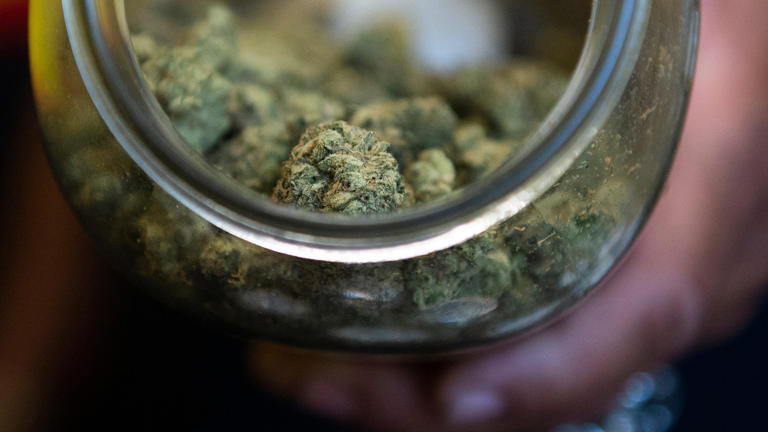
Cannabis is now sold in many different forms.
“Just because (cannabis) doesn’t lead to breaking the law and incarceration and those sorts of troubles doesn’t mean people can’t have their lives significantly altered by getting overly involved with this particular substance,” he said.
There are also open questions about cannabis, including whether the pain-killing benefits seen in short-term studies will last. Some painkillers, like opioids, can actually make people more sensitive to pain. It’s not yet clear whether cannabis can have this effect.
“You’d like to see what happens with these products over a longer period of time, ideally,” Kansagara said. “I would like to see that before recommending wholesale to patients.”
Although legalization and decriminalization are making a difference, cannabis remains hard to study. Until recent years, it was extremely difficult to gain access to cannabis for research, and there was little federal funding for such work. In early December, President Joe Biden signed a law that will make it easier to research cannabis.
Gold-standard studies compare a treatment versus a placebo, but it’s impossible to keep people in the dark about whether they’re getting high, said Dr. Donald Abrams, an oncologist and professor emeritus at University of California, San Francisco, who studies cannabis.
When Abrams studied cannabis use in his HIV patients, some critics thought patients must be too stoned to notice their pain. But Abrams said the patients reported that it did alleviate their pain.
Dosages of cannabis aren’t standardized, which adds to the difficulty of comparing one study against another, he said.
That’s why trials of cannabis for pain relief have shown mixed results, said Wil Ngwa, an associate professor of radiation oncology at Johns Hopkins Medicine, who’s working to create such standards for drug trials.
This lack of standardization also means people have to use trial and error to find an effective dose for them, according to Staci Gruber, who directs the Marijuana Investigations for Neuroscientific Discovery (MIND) program at McLean Hospital, a Harvard-affiliated psychiatric hospital outside Boston.
In one study, Gruber followed 37 volunteers using cannabis for chronic pain. After six months of treatment, participants reported lower levels of pain, better sleep, more coherence and less use of conventional painkillers.
‘Positives, not negatives’
Sims experienced the same benefits.
Daily marijuana use after his pec injury helped cut the pain, allowing him to lift more weight and recover faster. “I was able to come back stronger than I was before.”
Playing NFL ball, Sims said, is like living through a train wreck every Sunday. The best players – the ones whose careers last the longest, he said – “have learned how to recover quicker and get ready for that next train wreck.”
During his career, marijuana helped Sims rebound and improved his sleep, which allowed him to push his workouts.
Asked about side effects from his marijuana use, Sims pointed to his athletic and financial successes. “I wouldn’t call those side effects,” he said, laughing. “I see positives, not negatives.”
In 2021, Sims co-founded the cannabis company Primitiv Group with fellow former Lion Calvin Johnson Jr. Sims and Johnson acknowledge they used cannabis during their professional careers, though there was a zero tolerance policy then, which has loosened only slightly since. Both men believe the restrictions should be lifted.
About a decade ago, Sims persuaded his wife, Natalie, to try cannabis, when a bout with the bowel syndrome Crohn’s disease left her on a morphine drip in an emergency room.
“This can’t be how we live for the rest of our lives,” he told her. She uses cannabis now and finds relief, Sims said.
“It made me very passionate about pain and help for pain.”
Challenges of cannabis care
Cannabis doesn’t make pain go away, like Advil might get rid of a headache, Tishler said.
Instead, “it makes it so it doesn’t bother you so much,” he said. “It divorces the pain from the suffering.”
Whether it’s the THC or the CBD in cannabis or both that might be helpful against pain remains an open question, Kansagara said. THC is what makes people feel “high.” CBD appears to have anti-inflammatory properties, which may be useful to some.
Smoking joints isn’t a good approach for relieving chronic pain, said Tishler, who recommends his patients use edibles instead. The effect of inhaled cannabis wears off in three to four hours, while a gummy might last eight to 12 hours.
The yo-yo effect, when pain comes and goes over a few hours, can exacerbate suffering, Tishler said. “Short-acting actually turns out to be a bad approach in general in pain management.”
In Massachusetts, where medical cannabis has been legal since 2013 and recreational since 2016, doctors are more comfortable giving their patients permission to use cannabis, Tishler said. But they rarely bring it up themselves.
So, Tishler is trying to educate his peers. “If you were thinking the patient needs opioids, think cannabis first. Don’t wait for the patient to bring it up – it’s your job to bring it up,” he tells them.
Similarly, he’d like to get cancer patients on cannabis early in their care, rather than waiting until agony sets in. “Once people are at the end of their rope, things are worse and harder to treat than if we had started when things were still kind of OK.”
Most of the advice on what product to use now comes from the patient care advocates or “budtenders” who work behind the counter at dispensaries, Gruber noted with some concern. They typically don’t know the person’s medical history or history of cannabis use or whether they use other substances such as alcohol, other drugs or prescription medication. Product labels can often be misleading about their THC and CBD content.
The trial-and-error approach can be difficult and challenging for patients with major medical problems.
“Knowing what’s in your weed is critical, but also how you’re going to respond to it is an important consideration. And that’s something we don’t spend a lot of time on,” Gruber said. “You have to educate patients. They’re desperate for it, but it’s not easy, because we’re all different and cannabis is not a ‘one size fits all’ solution.”
Research may change future use.
For cannabis to reach its full potential as a painkiller, more research is needed, experts say.
“It’s really untapped right now, because of that lack of research,” Johnson said.
That’s why NFL players and owners have been supporting cannabis research. Owners have donated more than $1 million this year to two cannabis research programs.
“We need to become better educated about all these issues,” said Dr. Allen Sills, the NFL’s chief medical officer.
Ngwa, at Hopkins, collaborates with Sims and Johnson to lead some of that research.
He’s also looking at better ways to treat cancer pain with cannabis.
His studies suggest that not enough of the painkiller gets to a tumor when the cannabis is inhaled or ingested, so he has been exploring smart-drug delivery systems than can target the drug directly to the tumor. So far, he has tested only pancreatic tumors but hopes to rapidly expand to other cancer types.
Ngwa is concerned that preliminary research like his will encourage people to self-medicate, taking doses that may not be helpful. “You really have to wait for the clinical trials, but when people are desperate, they just do (anything). I definitely worry about that,” he said.
Until more is known, Sims will keep up his cannabis routine.
Now 39, he has dropped 50 pounds from his 320-pound playing weight, which has helped reduce the lingering bone-on-bone pain in his right knee. He rubs a Primitiv topical on it knee every day.
“My passion behind the plant and what it’s done for my family reigns supreme.”
Contact Karen Weintraub at kweintraub@usatoday.com.
Health and patient safety coverage at USA TODAY is made possible in part by a grant from the Masimo Foundation for Ethics, Innovation and Competition in Healthcare. The Masimo Foundation does not provide editorial input.
Consuming medicinal cannabis oil improves sleep in adults with insomnia
For More Information on Cannabis and CBD and YOU. Click On the Following Link
1st Hemp USA News is a resource of Inspirational Technologies (2021-2023)Inspirational Technologies (2023) AllRightsReservedYour ONE STOP BLOG FOR INFORMATION, EDUCATION, & INSPIRATION OF ESSENTIAL INNOVATION & RENOVATION of You-THANK YOU FOR YOUR INTEREST*This site receives virtually no compensation for sales of some or all mentioned products. We however place humanitarian value over monetary interests. Our monetary income goes back into research, development, discovery and healing.Inspirational Technologies – is Committed to Your Health Wellness Beauty and EnrichmentReporting on Today’s Internal Botanical and Skin Product Benefits
4 Hemp Club was Inspired by Steven Smith’s vision to
“Have an older generation 4H Club, where an older community of adults could carry on what the younger 4H Club envisioned.
Our 4H Platform Uses HEMP as an Agricultural Focal Point, deserving of research, development and with the
4 Hemp key points being Health Hope and Happiness, thru Hemp“.
Cannabis CBD and Me Inspirational Technologies Inspirational Technologies (2014) @Inspire123tech Background Noise Studios Logos by Steven M Smith
Cannabis News Week: Can Cannabis Prevent Covid Infections?
Story by Tony Owusu
Researchers from Oregon State University are expected to present evidence that cannabis is an even greater miracle drug than previously known.
After decades of suppression, the medical benefits of cannabis are well known and are often used by advocates to push for more freedom for both recreational and medicinal users
But there are new studies being conducted constantly, and the medical community may just be scratching the surface of understanding the benefits of marijuana.
Researchers at Oregon State University are expected to present information on using natural products, including hemp, to treat covid-19 at a virtual event called “Natural Products and Hemp: Under-appreciated Sources for Covid-19 Therapeutic Agents” on Dec. 6.
This event comes about a year after the school published a study that found that compounds in cannabis could prevent the virus that causes covid from infecting human cells.
Richard van Breeman, a professor of pharmaceutical sciences at Oregon State and a team of researchers found that a pair of cannabinoid acids bind to the SARS-CoV-2 spike protein, which then blocks a critical step in the infection process
The findings were published in the Journal of Natural products and, according to the university, set records for downloads and online views when it was released.
So, apparently there is an appetite for this type of research.
Righting an SBA Wrong for Cannabis
Access to capital has hampered the cannabis industry immensely even while state’s move to make the drug more legal than it has ever been in the United States.
Capital, especially for potential small business owners looking to get into the business, is nearly impossible to get due to the federally illegal nature of the drug.
But U.S. Senator Jacky Rosen (D-NV) has a plan to right some of those wrongs.
Sen. Rosen introduced legislation that would make regulated cannabis businesses eligible for loans and other programs from the federal Small Business Administration under the Fair Access for Cannabis Small Businesses Act.
The legislation will give proprietors access to the popular SBA 7(a) loans that other small businesses have access to, as well as disaster loans, microloans, and the Small Business Investment Company program.
“The unfair barriers to basic federal support and resources have hurt our state’s legally-operating cannabis small businesses,” said Sen. Rosen.
“This legislation will level the playing field so that cannabis small businesses… have access to the same federal resources and loans that other legal businesses are entitled to.”
Rosen’s legislation, when paired with the oft-discussed SAFE Banking Act, would create a regulatory framework that would ensure a diverse pool of players in the cannabis industry, according to Khadijah Tribble, CEO of the U.S. Cannabis Council.
“Senator Rosen’s landmark legislation would help advance equity and innovation in the cannabis industry by leveling the playing field for independent cannabis operators,” Tribble said.
A Decade of Recreational Cannabis
We all know the tropes. Weed smokers are lazy stoners with little motivation and the constant munchies.
While the tropes have some basis in reality, cannabis can definitely relax a person to the point where they don’t want to move, but new research from the University of Colorado Boulder suggests that the tropes don’t tell the whole story.
Angela Bryan, a professor of psychology, and Brian Keegan, an assistant professor of information science, recently debunked some of the most prevalent misconceptions following the 10-year anniversary of recreational cannabis’ legalization in the Centennial State.
Data suggests, according to the researchers that pot smokers “tend to use cannabis in conjunction with exercise in some form or fashion and that’s either using before exercise or using it after exercise for recovery purposes,” said Bryan, according to CPR.
“We also have larger epidemiological data, not collected by my lab, but where we see patterns such that cannabis users have lower rates of type two diabetes, better waist-to-hip ratios and better insulin function,”
For decades, marijuana has had an image problem — of which the most prominent has been the “lazy stoner.”
Sunken into the couch, the marijuana user only gets up from their comfortable spot between commercial breaks to raid the fridge and pantry in search of munchies. Or so it used to be believed.
Today, liberalization of marijuana laws across the United States and changing attitudes about the drug have also helped to change what the image of a marijuana user looks like.
Furthermore, increasing interest in cannabis from the medical and scientific communities has provided valuable insight about the drug’s potential.
As for the munchies, a study published in March of this year found that over a three-year period, marijuana users put on less weight than those who didn’t use marijuana products.
Now, in a new study from the University of Colorado (UC) in Boulder, researchers are asking a bold question: What if instead of making people lazy, marijuana could actually get users to engage in more physical activity than they normally would?
A new kind of runner’s high?
The study, published in the journal Frontiers in Public Health, looked at self-reported data from more than 600 marijuana users in states where the drug has been legalized.
The average age of users was 37.5 and was split almost down the middle in terms of sex, with slightly more males than females.
The vast majority — more than 80 percent of respondents — endorsed using cannabis in some form either directly before or directly after exercise.
Getting high and exercising also resulted in more physical activity as well.
Even after controlling for demographic factors like age and gender, co-users (those who used marijuana before or after exercise) on average took part in 43 more minutes of aerobic exercise per week and 30 more minutes of anaerobic exercise, such as weightlifting.
And co-users also surpassed the American College of Sports Medicine’s recommendations of a minimum of 150 minutes of aerobic exercise per week by nearly 10 minutes.
“The average cannabis user in our study was exercising a lot more than your average American,” said Angela Bryan, PhD, a professor of psychology and neuroscience at UC-Boulder and one of the study’s authors.
“It seemed that not only were cannabis users in general exercising quite a bit, but they were combining cannabis and exercise behavior at pretty high rates,” she said.
While it’s unclear why this association appears, the study does offer some clues.
Co-users frequently cited marijuana as increasing enjoyment of exercise and aiding in workout recovery. Less frequently, they said that it helped with motivation and physical performance.
According to Dr. Bryan, it’s possible that co-users were just having more fun.
“That can help people do it for longer as well. If you’re more motivated and you’re having more fun while you’re doing it, you’re enjoyment is higher. And we know from decades of exercise work that that’s going to be associated with more physical activity,” she said.
Hazy findings
However, the study is far from demonstrating any clear causal relationship between marijuana use and increased physical activity.
Others have weighed in saying that the self-reported nature of the study makes it hard to draw any real conclusions.
“These results may be more reflective of the fact that marijuana is a more significant part of these respondents’ overall lifestyle.” Paul Armentano, the deputy director of the National Organization for the Reform of Marijuana Laws (NORML) told Healthline.
“It would be interesting to know if many of these respondents would similarly report that marijuana provides increased enjoyment with other routine activities, as well, such as eating dinner, watching television, playing video games, etc,” he said. “My presumption is that a similar trend would emerge if these questions were asked.”
Other confounding factors, which the authors point out, include the fact that states where marijuana is legal are “without exception more physically active than the national average.”
In short, there’s plenty of work still to be done on the issue.
But from a public health perspective, if marijuana is in fact helping some users get up off the couch instead of lounge on it, then ultimately that’s something worth investigating.
1st Hemp USA News is a resource of Inspirational Technologies (2021-2022)Inspirational Technologies (2022) AllRightsReservedYour ONE STOP BLOG FOR INFORMATION, EDUCATION, & INSPIRATION OF ESSENTIAL INNOVATION & RENOVATION of You-THANK YOU FOR YOUR INTEREST*This site receives virtually no compensation for sales of some or all mentioned products. We however place humanitarian value over monetary interests. Our monetary income goes back into research, development, discovery and healing.Inspirational Technologies – is Committed to Your Health Wellness Beauty and EnrichmentReporting on Today’s Internal Botanical and Skin Product Benefits
4 Hemp Club was Inspired by Steven Smith’s vision to
“Have an older generation 4H Club, where an older community of adults could carry on what the younger 4H Club envisioned.
Our 4H Platform Uses HEMP as an Agricultural Focal Point, deserving of research, development and with the
4 Hemp key points being Health Hope and Happiness, thru Hemp“.
Cannabis CBD and Me Inspirational Technologies Inspirational Technologies (2014) @Inspire123tech Background Noise Studios Logos by Steven M Smith


 HempSMART – a California-based company known for its science-driven CBD formulations – shared a similar ethos with us. By partnering, we aimed to combine our strengths: Inspirational Technologies’ research and product innovation, with hempSMART’s established marketing channels and customer base. Together, we celebrated on product development and education. For example, we co-hosted webinars featuring experts like Paula Vetter (hempSMART’s medical advisor) to inform consumers about CBD’s benefits. This partnership expanded our reach across the U.S. and even into international markets where hempSMART had a presence. It was a win-win: hempSMART gained new formulations and R&D support, while we gained a ready distribution network and a boost in brand visibility. Collaboration has always been in our DNA, and this was a powerful example of how working with like-minded innovators could amplify our impact.

 Steven M Smith InspirationalTech.org CEO since 2013.Inspirational Technologies (2025)


 1st Hemp USA News is a resource of Inspirational Technologies (2024)




 Background Noise Studios Logos by Steven M Smith


You must be logged in to post a comment.